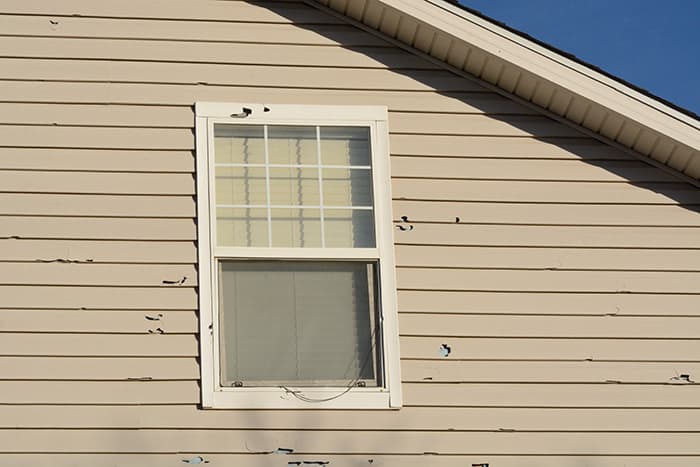
How Hail Really Damages Siding in the Quad Cities (Even When It Looks Minor)
How Hail Really Damages Siding in the Quad Cities (Even When It Looks Minor)
After a hailstorm, many Quad Cities homeowners walk around their home, notice a few dents in the siding, and assume the damage is only cosmetic. While that can be true in some cases, hail damage to siding is often more serious than it first appears, especially in Midwest climates where temperature swings and moisture quickly turn small flaws into larger problems.
Homes in Rock Island, Moline, Davenport, Bettendorf, and Milan are regularly exposed to hailstorms of varying size and intensity. Understanding how hail affects siding—and when minor-looking damage becomes a real concern—helps homeowners protect their exterior walls and avoid hidden moisture issues.
Why Siding Reacts Differently to Hail Than Roofs
Unlike roofing materials, siding panels are vertical and often thinner.
How hail impacts siding
When hail strikes siding:
Energy is concentrated into a smaller surface area
Panels flex inward on impact
Fasteners and seams absorb sudden force
Brittle areas crack instead of dent
The result may be subtle surface damage—or structural panel failure that’s not obvious from a quick glance.
Cosmetic vs Functional Hail Damage on Siding
Not all hail damage is equal.
Cosmetic hail damage
Cosmetic damage may include:
Shallow dents without cracking
Minor surface scuffing
No displacement of panels or seams
In these cases, siding may still shed water properly.
Functional hail damage
Functional damage affects performance and includes:
Cracks or fractures through the panel
Broken lock seams
Impact points near fasteners
Holes exposing house wrap
Once siding is functionally damaged, moisture intrusion becomes likely.
Why Midwest Temperature Swings Worsen Hail Damage
In Illinois and Iowa, hail damage rarely stays static.
Freeze-thaw expansion
When hail creates small cracks:
Rain enters the opening
Water freezes and expands
Cracks widen incrementally
This cycle repeats through fall, winter, and spring, gradually turning small damage into panel failure.
Where Hail Damage on Siding Is Most Common
Hail doesn’t strike all areas evenly.
High-risk siding zones
Hail damage is most common on:
Gable ends
Upper elevations
Areas near window and door trim
Panels with full sun exposure
These areas often receive the most direct impact and temperature stress.
Why Cracked Siding Is a Moisture Problem
Siding isn’t waterproof—it’s part of a drainage system.
What happens when siding cracks
Cracks allow:
Rain to reach house wrap
Moisture to enter wall cavities
Insulation to become damp
Drying time to increase
Over time, this can lead to rot, mold, or interior wall damage.
Interior Signs That Siding Hail Damage May Be Serious
Hail-damaged siding can cause subtle interior symptoms.
Warning signs inside the home
Musty odors near exterior walls
Drafts or cold spots
Bubbling paint or drywall
Increased heating or cooling costs
These signs often appear long after the hailstorm itself.
Why Homeowners Often Miss Siding Hail Damage
Siding damage is easy to overlook.
Common reasons damage goes unnoticed
Panels still look “attached”
Damage blends with texture or color
Problems develop gradually
Homeowners expect leaks to be immediate
By the time symptoms are obvious, repairs may be more extensive.
How Professional Inspections Identify True Damage
A professional siding inspection goes beyond surface appearance.
What inspectors evaluate
Panel flexibility and integrity
Seam engagement
Fastener stress points
Cracks hidden in shadow lines
Moisture entry paths
This approach helps separate cosmetic issues from functional failures.
Why Documentation Matters After Hailstorms
Even if you’re unsure about filing a claim, documentation is valuable.
Benefits of early documentation
Establishes storm-related cause
Provides a baseline condition
Protects future insurance options
Helps monitor damage progression
Waiting too long can complicate coverage decisions.
Why Local Experience Matters With Hail Damage
Midwest hail behaves differently than in other regions.
A local contractor understands:
Typical Quad Cities hail sizes
How siding materials fail locally
Which elevations take the most damage
That experience leads to more accurate evaluations.
Repair vs Replacement: The Big Question
Not all hail damage requires full replacement.
Repairs may be appropriate when
Damage is isolated
Panels can be matched
No moisture intrusion is present
Replacement may be necessary when
Cracking is widespread
Lock seams are compromised
Panels can’t be matched
Moisture damage has begun
A professional inspection helps determine the right path.
Why Waiting Can Increase Costs
Hail damage often worsens with time.
Risks of delaying repairs
Cracks expand
Moisture spreads
Panels become brittle
Replacement scope increases
Early action usually means simpler solutions.
Schedule a Free Siding Inspection After Hail
If your home has experienced hail—even if the damage looks minor—a professional inspection can help determine whether your siding is truly protecting your home. Twin Bridge Roofing & Construction is a licensed and insured roofing & siding contractor serving the Quad Cities, offering free, no-obligation siding inspections to identify hail damage before moisture problems develop.
📞 Call or text 309-948-4126 to schedule your inspection
🌐 Visit roofqc.com to request an appointment online
