How Midwest Temperature Swings Stress Vinyl Siding Fasteners
How Midwest Temperature Swings Stress Vinyl Siding Fasteners
Vinyl siding is one of the most popular exterior options in the Quad Cities—and for good reason. It’s durable, low maintenance, and well-suited for Midwest homes. But vinyl siding is also designed to move, and in a climate like Illinois and Iowa, that movement can place significant stress on siding fasteners over time.
For homeowners in Rock Island, Moline, Davenport, Bettendorf, and Milan, understanding how temperature swings affect siding fasteners helps explain why siding sometimes buckles, rattles, or pulls loose—even when it looked fine just a season ago.
Why Vinyl Siding Must Be Able to Move
Vinyl expands when temperatures rise and contracts when temperatures drop. This movement is expected and accounted for during proper installation.
How much movement are we talking about?
A single vinyl siding panel can expand or contract several inches across its length between winter cold and summer heat. In the Midwest, those swings can happen quickly—sometimes within the same week.
Why fasteners matter
Fasteners hold siding in place while still allowing movement. When fasteners are installed correctly, panels can slide slightly without stress. When fasteners restrict movement, problems begin.
The Role of Fasteners in a Vinyl Siding System
Fasteners are more than just nails or screws—they control how the entire siding system behaves.
Proper fastener installation allows:
Panels to slide left and right
Expansion and contraction without distortion
Seams to stay locked but flexible
Stress to be distributed evenly
Improper fastening turns normal movement into damaging force.
How Midwest Temperature Swings Create Stress
Midwest weather is uniquely challenging for vinyl siding.
Seasonal extremes
Homes in the Quad Cities experience:
Sub-zero winter temperatures
Rapid warm-ups during cold spells
Hot, humid summers
Sudden temperature drops after storms
Each swing forces siding panels to move. Over time, fasteners absorb that stress.
Common Fastener-Related Problems
When siding can’t move freely, the stress shows up in predictable ways.
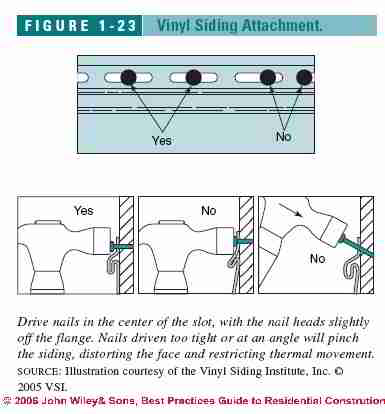
Nails driven too tightly
This is one of the most common installation issues.
When nails are driven tight against the nail hem:
Panels can’t slide
Expansion causes buckling or waviness
Seams may pop loose
Panels may crack under stress
Off-center fasteners
Fasteners should be centered in the nail slots. Off-center nails restrict movement in one direction, increasing uneven stress.
Incorrect fastener spacing
Fasteners placed too far apart can allow excessive movement and rattling. Fasteners placed too close together can restrict movement entirely.
Why Buckling Often Appears in Spring and Summer
Homeowners frequently notice siding problems once warmer weather arrives.
The temperature trigger
After winter contraction, siding expands rapidly in spring sunshine. If fasteners don’t allow movement, panels:
Bow outward
Create visible waves
Pull against trim and J-channel
These issues often become more noticeable on sunny elevations.
Wind Makes Fastener Stress Worse
Temperature alone isn’t the only factor.
Wind-related stress
Strong Midwest winds can:
Push behind siding panels
Pull against restricted fasteners
Worsen existing buckling
Cause rattling or popping noises
Once fasteners loosen or deform, moisture intrusion becomes more likely.
Moisture Problems Caused by Fastener Failure
Fastener stress doesn’t just affect appearance—it affects performance.
How moisture gets in
When panels buckle or pull loose:
Gaps open at seams
Water enters behind siding
House wrap is exposed to repeated wetting
Drying becomes limited
Moisture behind siding can lead to insulation damage, rot, or mold over time.
Interior Signs That Siding Movement Is a Problem
Fastener-related issues often create subtle interior symptoms.
Warning signs inside the home
Drafts along exterior walls
Uneven temperatures near windows
Musty odors after rain
Rising energy bills
These signs often trace back to compromised siding performance.
Why Older Installations Are More Vulnerable
Older siding installations may not meet current best practices.
Common issues on older homes
Fasteners installed too tightly
No allowance for expansion
Older vinyl formulations less flexible
Trim systems not designed for movement
These homes often benefit from professional evaluation before problems escalate.
How Professional Inspections Identify Fastener Issues
From the ground, fastener problems are hard to diagnose.
What professionals look for
Panel movement and alignment
Nail hem stress marks
Buckling patterns
Trim interaction with siding
Signs of moisture intrusion
Early detection can prevent full panel replacement.
Preventing Fastener-Related Siding Damage
The good news is that many issues can be corrected if caught early.
Preventative strategies include
Re-fastening restricted panels
Correcting trim clearances
Addressing wind-exposed elevations
Improving moisture management
Addressing fastener stress early extends siding life significantly.
Local Experience Matters
Midwest siding problems follow regional patterns. A local contractor understands:
How Quad Cities temperature swings affect vinyl
Which elevations experience the most stress
How wind exposure compounds movement issues
That experience leads to accurate recommendations and lasting fixes.
Schedule a Free Siding Inspection
If your siding looks wavy, noisy, or out of alignment—especially during warm weather—it may be experiencing fastener stress. Twin Bridge Roofing & Construction is a licensed and insured roofing & siding contractor serving the Quad Cities, offering free, no-obligation siding inspections to identify movement and fastener issues early.
📞 Call or text 309-948-4126 to schedule your inspection
🌐 Visit roofqc.com to request an appointment online
