Granule Loss After Winter: When It’s Normal and When Quad Cities Homeowners Should Be Concerned
Granule Loss After Winter: When It’s Normal and When Quad Cities Homeowners Should Be Concerned
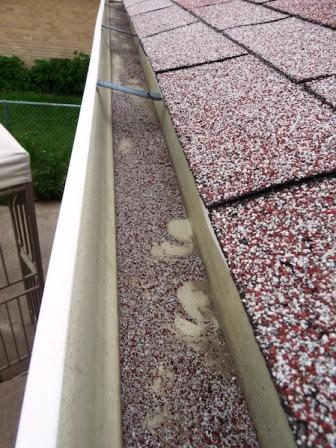
As spring arrives in the Quad Cities, homeowners often find small piles of dark, sand-like material in their gutters or at the ends of downspouts. This material is asphalt shingle granules, and seeing them after winter can raise immediate concerns about roof damage.
In Rock Island, Moline, Davenport, Bettendorf, and Milan, winter weather puts significant stress on roofing materials. Snow accumulation, ice, freeze-thaw cycles, and wind all affect shingles in different ways. When spring rain begins to wash debris off the roof, granules that loosened during winter often show up for the first time. The key question is whether that granule loss is normal seasonal shedding or a warning sign of roof failure.
Understanding the difference helps homeowners know when to monitor the situation and when to schedule an inspection.
What Roof Granules Actually Do
Granules aren’t decorative—they’re functional.
The purpose of asphalt shingle granules
Granules:
Protect shingles from UV radiation
Add fire resistance
Help regulate roof temperature
Shield the asphalt layer from weather exposure
When granules are lost, the shingle underneath becomes more vulnerable.
Why Granule Loss Is Common After Winter
Winter loosens granules even if shingles remain intact.
What happens during Midwest winters
In winter conditions:
Snow sits on shingles for extended periods
Ice expands and contracts on the roof surface
Wind vibrates shingles repeatedly
Freeze-thaw cycles stress the asphalt layer
Granules may loosen but not wash away until spring rain arrives.
When Granule Loss Is Considered Normal
Some granule shedding is expected.
Normal spring granule loss
Granule loss is typically normal if:
It’s light and evenly distributed
It appears mainly in gutters or downspouts
Shingles still look uniform in color
No bare patches are visible on the roof
Newer roofs and older roofs alike can experience minor seasonal shedding.
Why Spring Rain Makes Granule Loss More Noticeable
Rain reveals what winter hid.
April exposure
During winter:
Granules remain trapped by snow and ice
Little runoff occurs
In spring:
Rain flushes loose granules off the roof
Downspouts collect visible piles
Homeowners notice granules all at once
This sudden appearance often feels alarming even when it’s normal.
When Granule Loss Becomes a Red Flag
Not all granule loss should be ignored.
Warning signs of excessive loss
Granule loss may indicate a problem if:
Large piles collect in gutters repeatedly
Bare or shiny asphalt patches are visible
Shingles look uneven or blotchy
Granules appear after every rainfall
These signs suggest shingles are losing protective layers prematurely.
How Granule Loss Affects Roof Lifespan
Granules protect the asphalt core.
Long-term impact
When granules are gone:
UV rays break down asphalt faster
Shingles dry out and become brittle
Cracking and curling accelerate
Wind resistance decreases
Over time, this shortens the roof’s service life.
Why Certain Roof Areas Lose Granules First
Granule loss isn’t always uniform.
High-risk roof zones
Granule loss often appears first:
Along roof valleys
Near downspouts and drainage paths
On south- and west-facing slopes
On areas exposed to strong wind
These zones experience more runoff, sun exposure, and stress.
Why Granule Loss Is Often Misdiagnosed
Granules are easy to misinterpret.
Common misconceptions
Homeowners may assume:
Any granules mean immediate replacement
Granules always indicate hail damage
A single pile equals roof failure
In reality, context and pattern matter far more than quantity alone.
Interior Signs That May Accompany Excessive Granule Loss
Granule loss can correlate with deeper issues.
Interior clues
If granule loss is severe, homeowners may also notice:
Small leaks during heavy rain
Damp attic insulation
Increased attic heat in summer
These signs point to reduced shingle protection.
Why April Is the Best Time to Evaluate Granule Loss
Spring gives the clearest picture.
Benefits of spring inspection
April inspections:
Show post-winter shingle condition
Reveal wear before summer heat
Help homeowners plan ahead
Once summer arrives, heat can mask early warning signs.
How Professional Inspections Assess Granule Loss
Evaluation goes beyond gutter debris.
What inspectors look for
A professional inspection includes:
Checking shingle surfaces for bare spots
Evaluating overall color consistency
Inspecting high-stress roof areas
Correlating granule loss with shingle age
This helps determine whether the roof is aging normally or prematurely.
Why Local Experience Matters With Granule Loss
Midwest roofs age differently than those in mild climates.
A local contractor understands:
Quad Cities winter severity
Typical post-winter granule patterns
How age and exposure affect local roofs
That knowledge leads to accurate recommendations—not unnecessary replacements.
When Homeowners Should Schedule an Inspection
A roof inspection is recommended if:
Granules accumulate repeatedly
Bare asphalt is visible on shingles
The roof is over 10 years old
The roof hasn’t been inspected since winter
Early evaluation can extend roof life.
Granule Loss Is a Signal—Not Always a Problem
Seeing granules after winter doesn’t automatically mean your roof is failing. In many cases, it’s a normal part of seasonal wear. The key is recognizing when granule loss crosses the line from expected shedding into accelerated deterioration.
Schedule a Free Roof Inspection
If you’re noticing granules in your gutters or uneven shingle wear this spring, a professional inspection can help determine whether the loss is normal or a sign of concern. Twin Bridge Roofing & Construction is a licensed and insured roofing & siding contractor serving the Quad Cities, offering free, no-obligation inspections to evaluate roof condition and seasonal wear.
📞 Call or text 309-948-4126
🌐 Visit roofqc.com to schedule your inspection online
