Why Low-Slope Roof Sections Show Problems First Each Spring in the Quad Cities
Why Low-Slope Roof Sections Show Problems First Each Spring in the Quad Cities
As spring rain becomes more frequent in the Quad Cities, many homeowners are surprised to see roof issues appear in very specific areas—often not across the entire roof, but in smaller sections with a lower pitch. These areas may show staining, dampness, or early wear even when the rest of the roof appears fine.
In Rock Island, Moline, Davenport, Bettendorf, and Milan, low-slope roof sections are common. They’re often found over porches, additions, dormers, garages, or transitional roof areas. While they may look similar to the rest of the roof, these sections behave very differently in spring weather. Understanding why low-slope areas struggle first helps homeowners spot issues early and prevent moisture damage from spreading.
What Is Considered a Low-Slope Roof Section
Not all roofs have the same pitch.
Defining low-slope areas
A low-slope roof section typically:
Has a shallower pitch than the main roof
Drains water more slowly
Appears flat from the ground but still sheds water
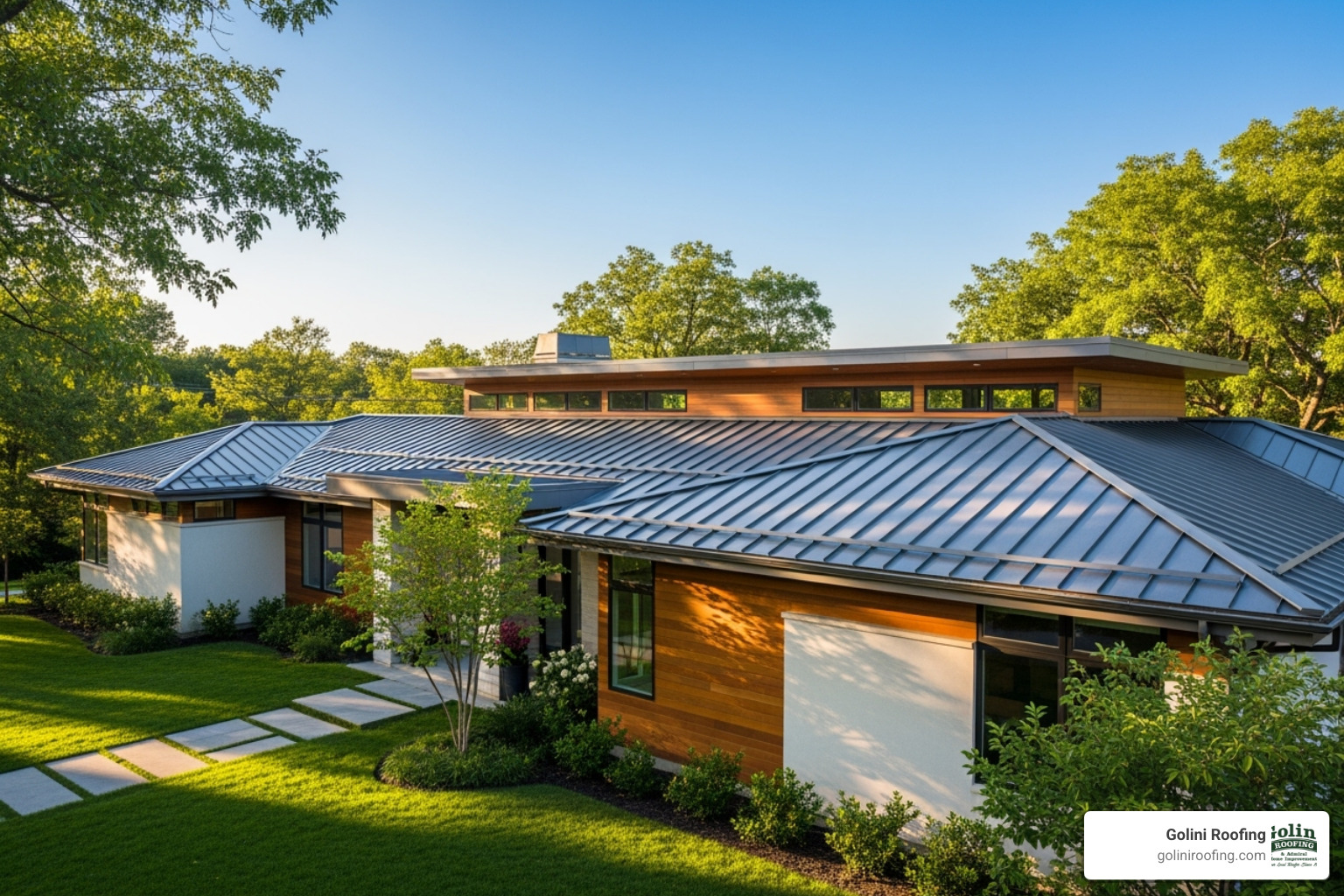
These sections are often integrated into otherwise steeper residential roofs.
Why Low-Slope Areas Drain More Slowly
Pitch controls water movement.
The role of gravity
On steeper slopes:
Water runs off quickly
Shingles dry faster
On low-slope sections:
Water moves more slowly
Moisture stays in contact with roofing materials longer
Drying time increases significantly
This difference becomes obvious during sustained spring rain.
Why Spring Rain Exposes These Areas First
Winter masks low-slope problems.
What changes in April
During winter:
Snow sits evenly across the roof
Ice limits visible runoff
In spring:
Rain flows immediately
Drainage patterns become visible
Low-slope sections stay darker and wetter longer
These conditions reveal stress that wasn’t obvious during colder months.
Common Locations of Low-Slope Sections on Homes
Low-slope areas aren’t random.
Where they’re usually found
In the Quad Cities, low-slope sections often appear:
Over front porches
At roof-to-wall transitions
On additions or remodels
Around dormers
On garage roofs attached to the home
These areas frequently connect to steeper roof planes, creating drainage challenges.
Why Low-Slope Areas Experience More Wear
Water exposure drives deterioration.
Increased stress factors
Low-slope sections experience:
Longer moisture contact
More debris accumulation
Slower drying after rain
Greater reliance on underlayment and flashing
Even minor installation imperfections are stressed more in these areas.
How Debris Compounds the Problem
Debris behaves differently on shallow pitches.
Debris-related issues
On low-slope roofs:
Leaves and granules settle instead of sliding off
Organic material traps moisture
Drainage paths become restricted
This creates pockets where water lingers after spring storms.
Why Low-Slope Sections Are More Leak-Prone
Water doesn’t need force—just time.
Moisture intrusion risk
Because water moves slowly:
It can work into seams more easily
Minor gaps become entry points
Underlayment sees more exposure
Leaks often begin subtly and worsen gradually.
Why These Issues Are Often Misdiagnosed
Problems may look like isolated leaks.
Common homeowner assumptions
Homeowners may think:
A single shingle failed
The issue is interior condensation
The roof is fine except for one spot
In reality, the roof pitch and drainage behavior are the root cause.
Interior Signs Linked to Low-Slope Roof Issues
Exterior moisture often shows up inside later.
Interior clues
Homeowners may notice:
Ceiling stains near additions or porches
Damp insulation in localized attic areas
Musty odors after prolonged rain
These symptoms often trace back to low-slope sections.
Why April Is the Best Time to Identify Low-Slope Problems
Spring provides the clearest conditions.
Benefits of spring evaluation
April inspections:
Reveal drainage behavior in real time
Show how quickly areas dry
Identify moisture-retaining zones early
Once summer heat arrives, many low-slope issues temporarily disappear from view.
How Professional Inspections Evaluate Low-Slope Sections
Low-slope evaluation requires targeted attention.
What inspectors look for
A professional inspection includes:
Checking drainage patterns
Evaluating material condition
Inspecting transitions to steeper slopes
Looking for debris buildup and moisture staining
This helps identify whether issues are material-related, design-related, or maintenance-related.
Why Local Experience Matters With Low-Slope Roofs
Midwest weather magnifies pitch-related issues.
A local contractor understands:
Quad Cities rainfall patterns
Common low-slope failure points in the region
How spring moisture behaves on residential roofs
That experience leads to accurate recommendations instead of guesswork.
When Homeowners Should Schedule an Inspection
A roof inspection is recommended if:
Water stains appear near additions or porches
Certain roof sections stay wet longer
The home has multiple roof pitches
The roof hasn’t been inspected since winter
Early detection prevents localized issues from spreading.
Low-Slope Areas Deserve Extra Attention in Spring
Low-slope roof sections aren’t defective—but they are more demanding. Spring rain highlights how these areas manage water and reveals whether they’re performing as intended. Catching issues early protects the rest of the roof system and the home below it.
Schedule a Free Roof Inspection
If you’re noticing moisture, staining, or slow drying on lower-pitch roof sections this spring, a professional inspection can help identify potential problem areas early. Twin Bridge Roofing & Construction is a licensed and insured roofing & siding contractor serving the Quad Cities, offering free, no-obligation inspections to evaluate roof pitch transitions, drainage behavior, and seasonal wear.
📞 Call or text 309-948-4126
🌐 Visit roofqc.com to schedule your inspection online
