Why Chimney Flashing Is One of the Most Common Leak Sources in the Quad Cities
Why Chimney Flashing Is One of the Most Common Leak Sources in the Quad Cities
When homeowners discover a roof leak, the chimney is often blamed—but rarely understood. In the Quad Cities, chimney flashing failures are one of the most common causes of persistent and recurring roof leaks, especially after wind, heavy rain, or freeze-thaw cycles.
Homes in Rock Island, Moline, Davenport, Bettendorf, and Milan experience weather patterns that place extreme stress on roof-to-chimney intersections. Understanding how chimney flashing works—and how it fails—helps explain why leaks often appear near fireplaces, interior walls, or ceilings long after a storm has passed.
What Chimney Flashing Actually Does
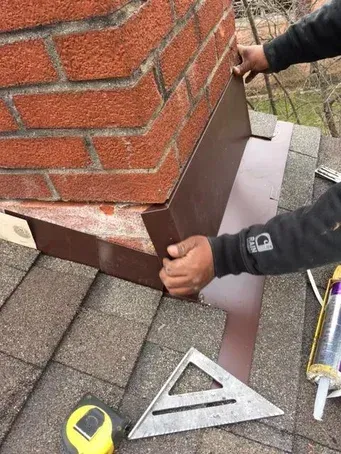
Chimney flashing is a multi-piece system designed to seal the joint where the roof meets the chimney.
Key components of chimney flashing
A proper system includes:
Step flashing layered with shingles
Counter flashing embedded into the chimney masonry
Base flashing at the lower edge
Cricket or saddle flashing on wider chimneys
Each piece works together to direct water safely down and away from the chimney.
Why Chimneys Are High-Risk Leak Areas
Chimneys interrupt the natural flow of water off the roof.
Why water targets chimneys
At roof-to-chimney intersections:
Water slows and pools
Snow accumulates more deeply
Ice forms and refreezes
Wind pushes rain sideways
These conditions make chimneys one of the most stressed areas on the roof.
Freeze-Thaw Cycles Break Flashing Seals
Midwest winters are especially hard on chimney flashing.
How freeze-thaw causes failure
When moisture enters small gaps:
Water freezes and expands
Sealants crack or pull away
Metal flashing shifts slightly
Gaps widen with each cycle
By spring, flashing that looked fine in fall may no longer be watertight.
Wind-Driven Rain Finds Chimney Weak Points
Rain rarely falls straight down in Midwest storms.
Wind-related chimney leaks
Strong winds can:
Push rain behind step flashing
Force water under shingles near the chimney
Drive moisture upward along flashing seams
Even small imperfections become entry points during wind-driven rain.
Why Chimney Leaks Travel Before Showing Up
Chimney leaks are often deceptive.
Why leaks appear far from the chimney
Water entering near the chimney can:
Run along roof decking
Follow rafters downward
Travel inside wall cavities
As a result, stains may appear several feet away from the actual leak source.
Common Chimney Flashing Failure Points
Certain areas fail more often than others.
Typical failure locations
Cracked or missing counter flashing
Step flashing not layered correctly
Sealant used instead of proper flashing
Rusted or loose metal
No cricket behind wide chimneys
These issues are common on older roofs and rushed installations.
Why Caulk Alone Is Not a Fix
Caulk is often used as a temporary solution.
Why caulk fails at chimneys
UV exposure dries it out
Freeze-thaw cracks it
Movement breaks the seal
Proper chimney flashing relies on layered metal, not sealant alone.
Interior Warning Signs of Chimney Flashing Failure
Leaks near chimneys often show up indoors first.
Interior clues to watch for
Ceiling stains near fireplaces
Damp drywall on chimney sides
Musty odors after rain
Peeling paint near interior chimney walls
These signs often worsen during prolonged rain or snowmelt.
Why Chimney Leaks Get Worse Over Time
Small flashing issues rarely stay small.
Escalation pattern
Minor flashing gap forms
Water enters during storms
Moisture saturates decking or framing
Interior damage spreads
Repairs become more extensive
Early repairs prevent structural damage and mold risk.
How Professional Inspections Evaluate Chimney Flashing
Chimney flashing requires close inspection.
What professionals assess
Step flashing integration with shingles
Counter flashing embedment
Condition of metal and fasteners
Presence of proper cricket flashing
Signs of moisture migration
This system-based evaluation identifies problems homeowners can’t see from the ground.
Why Local Experience Matters With Chimneys
Midwest chimneys fail in predictable ways.
A local contractor understands:
Quad Cities freeze-thaw behavior
Typical chimney construction styles
Common flashing shortcuts on older homes
That experience leads to accurate diagnosis—not guesswork.
When Homeowners Should Inspect Chimney Flashing
Chimney inspections are recommended:
After heavy rain or snowmelt
When interior stains appear near fireplaces
After windstorms
As part of routine roof maintenance
Early inspection saves money and prevents interior damage.
Schedule a Free Chimney Flashing Inspection
If you’ve noticed stains, moisture, or leaks near your chimney—or want to confirm your flashing is properly protecting your home—a professional inspection can help. Twin Bridge Roofing & Construction is a licensed and insured roofing & siding contractor serving the Quad Cities, offering free, no-obligation inspections to evaluate chimney flashing and roof intersections.
📞 Call or text 309-948-4126 to schedule your inspection
🌐 Visit roofqc.com to request an appointment online
