Why Pipe Boots Are One of the Most Common Roof Leak Sources in the Quad Cities
Why Pipe Boots Are One of the Most Common Roof Leak Sources in the Quad Cities
When homeowners think about roof leaks, their attention usually goes straight to shingles, valleys, or flashing around chimneys. One of the most common leak sources on Midwest roofs, however, is much smaller and often overlooked: the pipe boot.
Homes throughout Rock Island, Moline, Davenport, Bettendorf, and Milan all have multiple pipe penetrations exiting through the roof. These pipes vent plumbing systems and must remain open to function properly. Where each pipe passes through the roof surface, a pipe boot creates a watertight seal. In Quad Cities weather conditions, pipe boots frequently fail well before the shingles around them, allowing water to enter the roof system quietly.
Understanding how pipe boots work, why they deteriorate, and how leaks develop around them helps homeowners catch issues early—before minor leaks become interior damage.
What a Pipe Boot Does on a Roof
A pipe boot is a flashing component installed where a pipe penetrates the roof.
The role of a pipe boot
A properly installed pipe boot:
Seals tightly around the pipe
Integrates with shingles and underlayment
Prevents water from entering the roof system
Allows slight pipe movement without breaking the seal
Although small, pipe boots are critical to roof performance.
Why Pipe Boots Fail Faster Than Shingles
Pipe boots are made from different materials than the rest of the roof.
Material differences matter
Most pipe boots include:
A rubber or synthetic collar around the pipe
A metal, plastic, or composite flashing base
Rubber components degrade faster than asphalt shingles, especially under constant sun exposure.
How Quad Cities Weather Accelerates Pipe Boot Failure
Midwest weather is especially hard on pipe boots.
Regional stress factors
In the Quad Cities, pipe boots are exposed to:
Intense summer UV radiation
Extreme temperature swings
Freeze-thaw cycles in winter
Snow buildup around pipe bases
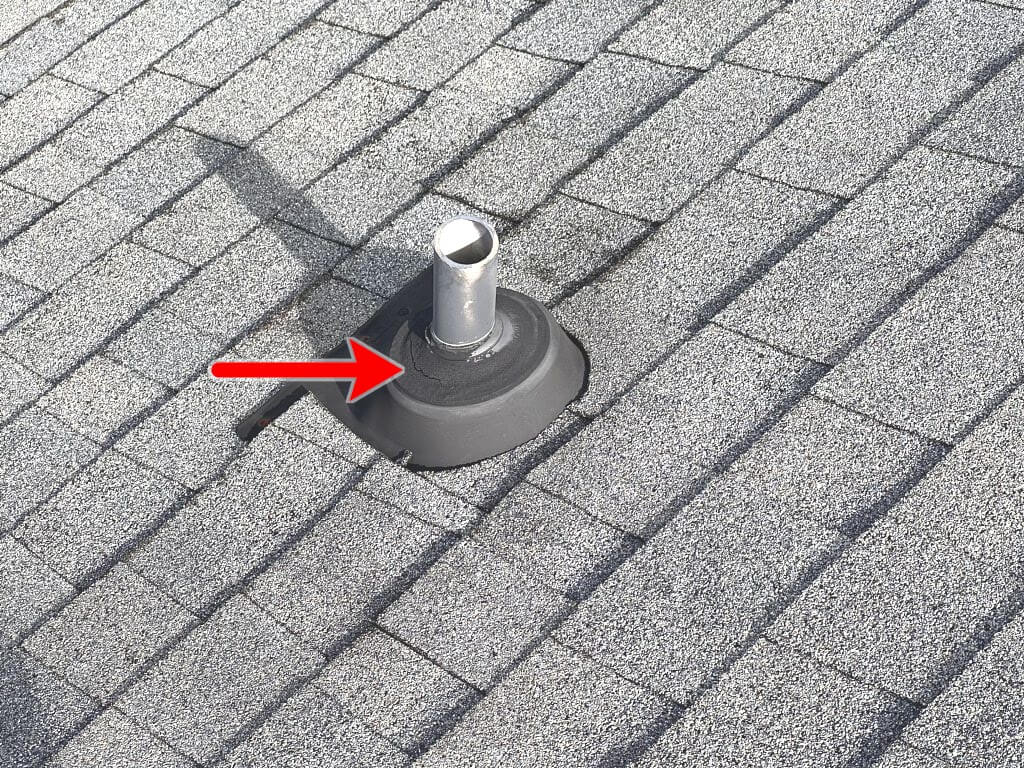
Over time, rubber collars dry out, stiffen, and crack.
How Pipe Boot Cracks Turn Into Roof Leaks
Pipe boot failures usually begin subtly.
Typical failure progression
Rubber collar dries and loses flexibility
Small cracks form around the pipe
Gaps open between the pipe and boot
Wind-driven rain enters the opening
Water reaches the attic or ceiling
Because the opening is small, leaks often develop slowly and go unnoticed at first.
Why Pipe Boot Leaks Are Hard to Trace
Pipe boot leaks don’t always show up directly below the pipe.
How water travels
Once water enters at a pipe boot, it can:
Run down the outside of the pipe
Follow roof decking seams
Travel along rafters or trusses
Appear several feet away inside the home
This makes pipe boot leaks easy to misdiagnose without a thorough roof inspection.
Exterior Signs of Pipe Boot Failure
Some warning signs are visible from the roof surface.
Common exterior indicators
Inspectors often find:
Cracked or split rubber collars
Rubber pulling away from the pipe
Brittle or missing rubber sections
Loose or deteriorated flashing bases
These signs usually worsen quickly once deterioration begins.
Interior Signs Homeowners May Notice
Pipe boot leaks often reveal themselves indoors.
Interior warning signs
Homeowners may notice:
Ceiling stains near bathrooms or kitchens
Drips that appear after heavy rain
Musty odors in attic spaces
Damp insulation near roof penetrations
Because pipe boots serve interior plumbing, leaks often appear near those rooms.
Why Caulking Pipe Boots Is Not a Long-Term Fix
Pipe boots are commonly “patched” with caulk.
Why caulk fails at pipe boots
Caulk:
Degrades quickly under UV exposure
Cracks during freeze-thaw cycles
Restricts natural movement of the pipe
Caulking may stop water temporarily but rarely provides a lasting solution.
How Pipe Boot Leaks Affect the Rest of the Roof
Leaks don’t stay isolated.
Downstream damage risks
Ongoing moisture can:
Saturate roof decking
Weaken fastener holding strength
Damage insulation
Promote mold growth
Left unchecked, a simple pipe boot failure can lead to structural repairs.
Why Pipe Boots Often Fail Midway Through a Roof’s Life
Many homeowners are surprised to learn pipe boots can fail early.
Timing matters
Pipe boots may deteriorate:
7–10 years into a roof’s lifespan
Even when shingles are still in good condition
Due to material aging rather than storm damage
This is why inspections look beyond shingles alone.
How Professional Inspections Evaluate Pipe Boots
Pipe boots require close, hands-on evaluation.
What inspectors assess
A proper inspection includes:
Checking rubber flexibility and cracking
Inspecting flashing integration
Evaluating shingle condition around the boot
Looking for interior moisture patterns
This approach identifies failures before major leaks develop.
Why Local Experience Matters With Pipe Boot Failures
Midwest pipe boot failures follow predictable patterns.
A local contractor understands:
Quad Cities UV exposure levels
Seasonal temperature swings
Common pipe boot materials used in the area
That experience leads to accurate diagnosis and durable repairs.
When Homeowners Should Schedule a Roof Inspection
A roof inspection is recommended if:
The roof is over 7–10 years old
Interior stains appear near plumbing areas
Heavy rain causes unexplained drips
The roof has not been inspected recently
Early detection keeps repairs simple and affordable.
Small Component, Big Consequences
Pipe boots may be small, but they play a major role in keeping water out of your home. In the Quad Cities, they are one of the most common sources of roof leaks—and one of the easiest problems to prevent with timely inspection.
Schedule a Free Roof Inspection
If you’re concerned about roof leaks near pipe penetrations or want to ensure all pipe boots are properly sealed, a professional inspection can help. Twin Bridge Roofing & Construction is a licensed and insured roofing & siding contractor serving the Quad Cities, offering free, no-obligation inspections to evaluate pipe boots, roof penetrations, and overall roof performance.
📞 Call or text 309-948-4126
🌐 Visit roofqc.com to schedule your inspection online
