Is That a Roof Leak or Just Condensation? What Quad Cities Homeowners Need to Know About Skylights in Spring
Is That a Roof Leak or Just Condensation? What Quad Cities Homeowners Need to Know About Skylights in Spring
As spring arrives in the Quad Cities, homeowners often notice moisture around skylights for the first time all year. Water droplets on glass, damp drywall near the frame, or even dripping during temperature swings can quickly trigger concern about a roof leak. In many cases, however, the issue isn’t a leak at all—it’s condensation.
Homes in Rock Island, Moline, Davenport, Bettendorf, and Milan experience significant temperature and humidity changes in April. Cool nights, warmer days, and lingering indoor humidity create ideal conditions for skylight condensation. Knowing how to tell the difference between condensation and a true roof leak helps homeowners avoid unnecessary repairs while still addressing real problems promptly.
Why Skylight Moisture Becomes Common in April
Spring creates the perfect environment for condensation.
What changes in early spring
In April:
Indoor air remains warm and humid
Outdoor temperatures fluctuate daily
Skylight glass stays cooler than room air
When warm, moist indoor air contacts cool glass, condensation forms.
What Skylight Condensation Actually Is
Condensation is a moisture reaction, not a roof failure.
How condensation forms
Condensation occurs when:
Warm air holds moisture
Moist air contacts a cool surface
Water vapor turns into liquid droplets
Skylights are especially prone because they are glass surfaces exposed to outdoor temperatures.
Why Skylights Are More Prone Than Windows
Skylights behave differently than vertical windows.
Unique skylight characteristics
Skylights:
Face the sky rather than the side of the home
Cool faster overnight
Collect warm air rising from below
These factors increase condensation risk during spring temperature swings.
Signs the Moisture Is Likely Condensation
Some indicators point toward condensation rather than a leak.
Common condensation clues
Condensation is more likely if:
Moisture appears only on the glass
Dripping occurs during cool mornings
Water dries as the day warms
No moisture appears after steady rain
Condensation often follows a daily pattern.
Signs the Moisture Could Be a Roof Leak
Leaks behave differently than condensation.
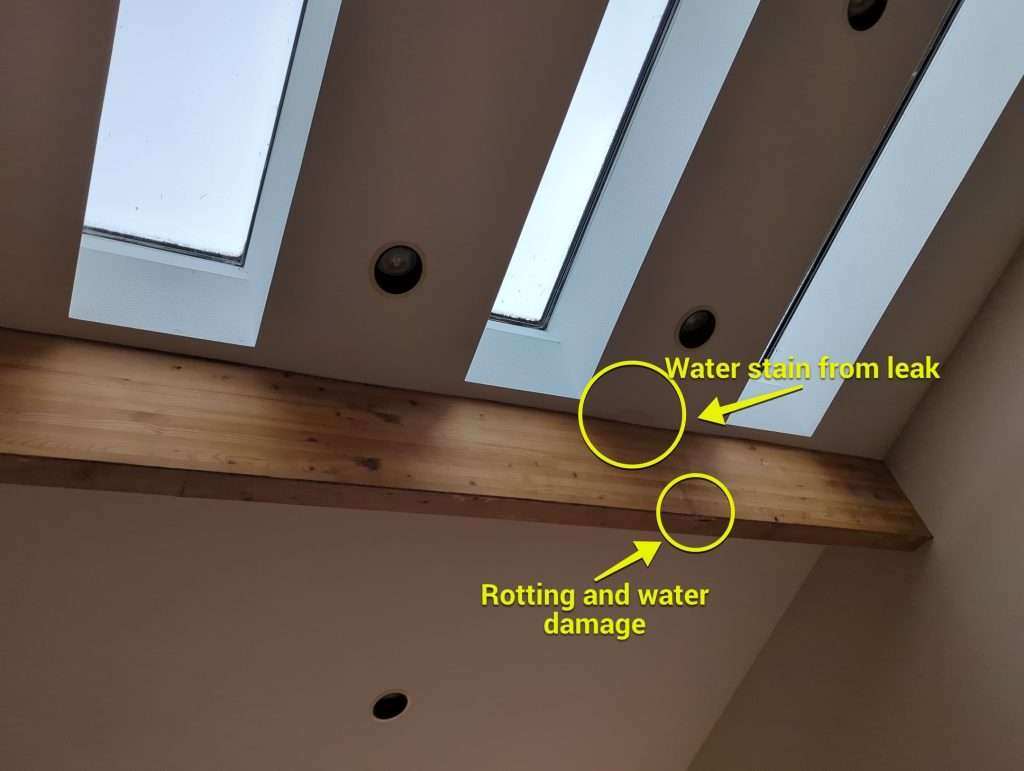
Warning signs of a true leak
A roof leak is more likely if:
Moisture appears after rainfall
Water stains grow over time
Drywall or trim feels soft
Moisture appears regardless of indoor humidity
These symptoms suggest water intrusion from outside.
Why April Makes the Difference Hard to Spot
Spring conditions blur the lines.
Why homeowners get confused
In early spring:
Condensation can drip like a leak
Rain and humidity overlap
Drying times are slower
This makes professional evaluation valuable when symptoms persist.
How Ventilation Affects Skylight Condensation
Airflow plays a major role.
The role of indoor ventilation
Poor ventilation can:
Trap humid air near ceilings
Increase condensation at skylights
Prolong drying time
Bathrooms, kitchens, and vaulted ceilings often contribute to higher humidity near skylights.
Why Older Skylights Condense More
Age affects skylight performance.
Aging skylight factors
Older skylights may have:
Single-pane or outdated glazing
Reduced thermal efficiency
Worn seals
These features make them more susceptible to condensation than newer designs.
How Condensation Can Still Cause Damage
Even condensation deserves attention.
Potential risks
Repeated condensation can:
Stain drywall
Damage interior trim
Encourage mold growth
Weaken finishes over time
While not a leak, unmanaged condensation can still cause interior issues.
How Professionals Evaluate Skylight Moisture
Inspection looks at more than surface water.
What inspectors assess
A proper evaluation includes:
Checking flashing and seals
Reviewing skylight age and type
Measuring moisture patterns
Evaluating ventilation and humidity
This helps determine whether moisture is internal or external.
Why Spring Is the Right Time to Address Skylight Issues
April offers a clear diagnostic window.
Benefits of spring evaluation
Spring assessments:
Capture condensation patterns
Identify early flashing issues
Prevent summer humidity problems
Waiting until summer can hide condensation-related clues.
What Homeowners Should Do When Moisture Appears
Avoid guessing.
Smart next steps
Homeowners should:
Note when moisture appears
Observe patterns related to temperature or rain
Avoid sealing or patching without evaluation
Schedule a professional inspection if unsure
Correct diagnosis prevents unnecessary repairs.
Why Local Experience Matters With Skylight Issues
Midwest climate matters.
A local contractor understands:
Quad Cities humidity cycles
Seasonal temperature swings
Common skylight issues in the region
That experience helps separate condensation from true roof leaks.
Condensation Isn’t a Failure—but It Is a Signal
Skylight condensation doesn’t automatically mean something is wrong, but it does signal how your home is managing heat and moisture during seasonal transitions. Knowing the difference protects both your roof and your peace of mind.
Schedule a Free Roof Inspection
If you’re seeing moisture around a skylight and aren’t sure whether it’s condensation or a roof issue, a professional inspection can provide clarity. Twin Bridge Roofing & Construction is a licensed and insured roofing & siding contractor serving the Quad Cities, offering free, no-obligation inspections to evaluate skylights, roof performance, and moisture concerns.
📞 Call or text 309-948-4126
🌐 Visit roofqc.com to schedule your inspection online
