Why Roof Leaks Often Start at Flashing — Not Shingles
Why Roof Leaks Often Start at Flashing — Not Shingles
When homeowners in the Quad Cities discover a roof leak, the first thing they usually suspect is a bad shingle. While shingles do fail over time, many Midwest roof leaks actually start somewhere else: roof flashing.
Flashing is one of the most critical—and misunderstood—components of a roofing system. In communities like Rock Island, Moline, Davenport, Bettendorf, and Milan, where homes face heavy rain, snow, wind, and freeze-thaw cycles, flashing problems are one of the most common causes of mysterious or recurring leaks.
Understanding how flashing works, where it fails, and why Midwest weather accelerates those failures can help homeowners catch issues before interior damage spreads.
What Roof Flashing Actually Does
Flashing is typically made of metal and is installed at points where the roof surface is interrupted or changes direction.
The purpose of flashing
Flashing is designed to:
Redirect water away from vulnerable areas
Seal transitions where shingles alone can’t protect
Prevent water from entering through joints and seams
Unlike shingles, flashing doesn’t cover a wide surface. It protects specific, high-risk locations.
Common Flashing Locations on Midwest Homes
Every roof has multiple flashing zones, and each behaves differently under weather stress.
High-risk flashing areas include
Chimneys
Roof-to-wall intersections
Plumbing vent pipes
Roof valleys
Skylights
Dormers and step-downs
If a leak appears near one of these areas, flashing is often the culprit.
Why Flashing Fails More Often Than Shingles
Flashing and shingles are made of different materials, and they respond differently to temperature changes.
Midwest weather is the problem
In Illinois and Iowa, flashing is constantly exposed to:
Freeze-thaw expansion and contraction
Wind uplift that flexes metal
Snow and ice buildup
Summer heat that dries out sealants
Over time, these stresses cause flashing to loosen, separate, or crack—especially at seams and fasteners.
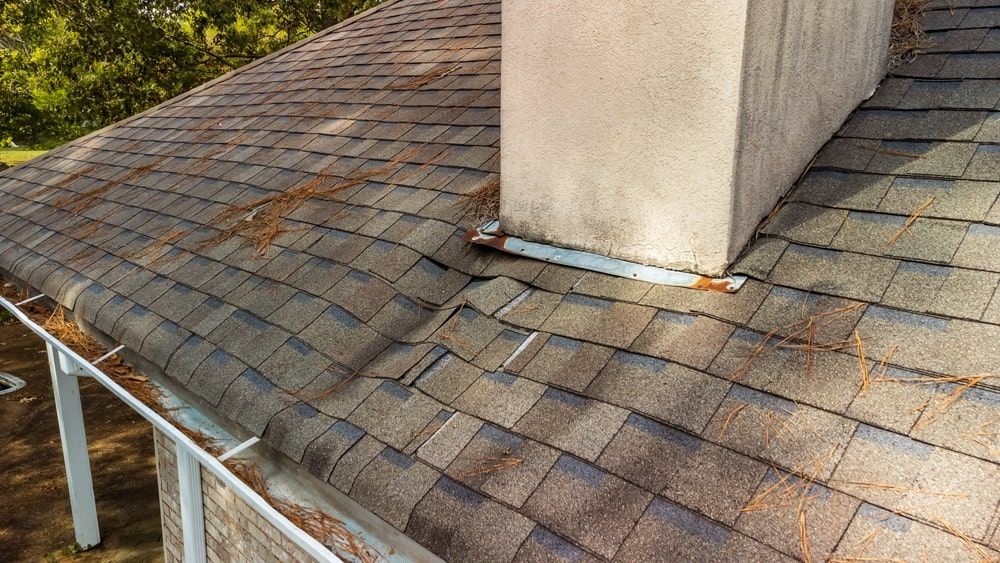
Chimney Flashing: One of the Most Common Leak Sources
Chimneys are rigid structures, while roofs move slightly over time.
Why chimneys are vulnerable
Brick and mortar expand differently than roofing materials
Metal flashing flexes while masonry does not
Mortar joints can crack or deteriorate
Sealant can dry out or pull away
Even small separations can allow water to enter during heavy rain or wind-driven storms.
Roof-to-Wall Flashing and Step Flashing Issues
Anywhere a roof meets a vertical wall, step flashing is used to guide water down and away.
How step flashing fails
Problems often occur when:
Flashing was installed incorrectly
Siding was installed too tight over flashing
Sealants were relied on instead of proper metal integration
Wind repeatedly pushes water sideways
When step flashing fails, water often enters behind siding and travels downward before showing inside.
Valley Flashing and Water Volume Problems
Roof valleys collect large amounts of water, especially during heavy spring rain.
Why valleys are high-risk
Debris can build up and trap moisture
Ice can form and force water sideways
Metal valleys can separate at seams
Shingles in valleys experience accelerated wear
A small valley flashing issue can cause leaks far from where water actually enters.
Why Flashing Leaks Are Often Hard to Trace
One of the most frustrating aspects of flashing failures is that leaks don’t always appear directly below the problem.
How water travels
Water entering through flashing can:
Run along roof decking
Follow rafters or framing
Pool in insulation
Appear inside rooms far from the source
This is why some leaks seem to “move” or only appear during certain storms.
Signs Homeowners Often Miss
Flashing issues don’t always cause immediate dripping.
Subtle warning signs
Water stains near chimneys or walls
Paint bubbling near ceilings
Musty odors after rain
Damp insulation in the attic
Leaks that appear only during wind-driven rain
If leaks only occur during heavy storms, flashing is often involved.
Why Sealant Alone Is Not a Long-Term Fix
Caulking and sealants are useful—but they are not permanent solutions.
The sealant problem
In Midwest climates:
Sealants dry out faster
UV exposure breaks them down
Temperature swings cause cracking
Movement pulls sealant away from surfaces
Proper flashing relies on metal layering and water direction, not just caulk.
Why Professional Flashing Inspections Matter
From the ground, flashing problems are rarely visible.
A professional inspection checks
Flashing attachment and overlap
Proper step flashing installation
Sealant condition
Siding-to-roof integration
Signs of hidden moisture intrusion
Catching flashing issues early can prevent structural damage and interior repairs.
Local Experience Makes a Difference
Midwest roofing systems require region-specific detailing. A local contractor understands:
How Quad Cities storms drive rain and wind
Common flashing failure points on local home styles
How seasonal weather impacts repairs
That knowledge helps ensure fixes last—not just until the next storm.
Schedule a Free Roof Flashing Inspection
If you’ve experienced leaks near chimneys, walls, or valleys—or if leaks only happen during heavy or windy rain—flashing may be the issue. Twin Bridge Roofing & Construction is a licensed and insured roofing & siding contractor serving the Quad Cities, offering free, no-obligation roof inspections to identify flashing problems before they lead to major damage.
📞 Call or text 309-948-4126 to schedule your free inspection
🌐 Visit roofqc.com to request an appointment online
