Why Roof Underlayment Is the Real Defense Against Midwest Roof Leaks
Why Roof Underlayment Is the Real Defense Against Midwest Roof Leaks
When homeowners think about roof leaks, they usually focus on shingles. But in the Midwest—especially in the Quad Cities—roof underlayment is often the layer that determines whether water stays outside or reaches the interior of the home.
Underlayment acts as a secondary water barrier beneath the shingles. When wind-driven rain, ice dams, or snowmelt overwhelm the surface materials, underlayment becomes the last line of defense. For homes in Rock Island, Moline, Davenport, Bettendorf, and Milan, understanding how underlayment works—and how it fails—helps explain why leaks can occur even when shingles appear intact.
What Roof Underlayment Actually Does
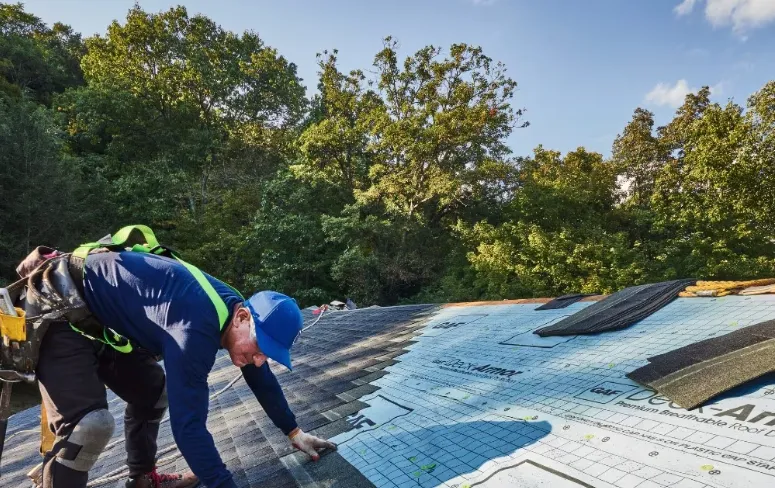
Roof underlayment is installed directly on top of the roof decking and underneath the shingles.
Its primary purpose
Underlayment is designed to:
Provide a secondary moisture barrier
Protect decking from water intrusion
Block wind-driven rain that bypasses shingles
Help manage water during ice dam events
Shingles shed water. Underlayment stops it when shingles can’t.
Why Underlayment Matters More in the Midwest
Midwest weather routinely overwhelms surface roofing materials.
Regional stress factors
In the Quad Cities, roofs must handle:
Freeze-thaw cycles
Ice dam water backup
Wind-driven rain
Heavy spring downpours
Snow sitting on the roof for extended periods
These conditions regularly force water beneath shingles—placing constant demand on the underlayment layer.
Ice Dams Are the Biggest Underlayment Test
Ice dams don’t just damage shingles—they test the limits of underlayment.
How ice dams challenge underlayment
When ice blocks normal drainage:
Snow melts higher on the roof
Water flows downward
Ice at the eaves stops runoff
Water backs up under shingles
At this point, underlayment—not shingles—is doing the work.
If the underlayment isn’t designed to handle standing water, leaks occur.
Wind-Driven Rain Reaches Underlayment Quickly
Rain doesn’t always fall straight down in Midwest storms.
Why wind-driven rain matters
Strong winds can:
Push water sideways under shingles
Force rain upward along roof slopes
Drive moisture into seams and nail penetrations
Underlayment must resist water movement from multiple directions—not just downward flow.
Types of Roof Underlayment and How They Perform
Not all underlayment offers the same level of protection.
Common underlayment types
Felt underlayment: Traditional, less resistant to prolonged moisture
Synthetic underlayment: Stronger, more tear-resistant, better moisture control
Ice & water shield: Self-adhering membrane designed for standing water and freeze-thaw conditions
In Midwest roofing systems, ice & water shield is critical at eaves, valleys, and penetrations.
Why Underlayment Failures Are Hard to Spot
Underlayment problems are hidden by design.
Why homeowners don’t see it
Shingles conceal underlayment damage
Leaks often travel before appearing inside
Problems develop gradually
By the time water reaches the interior, underlayment may already be compromised.
Exterior Clues That Underlayment Is Being Overworked
Some exterior signs suggest underlayment is under stress.
Warning signs
Leaks only during ice melt or heavy rain
Water stains near roof edges
Issues that reappear despite intact shingles
These symptoms often mean the underlayment layer is being relied on—and may be failing.
Interior Signs Linked to Underlayment Problems
Interior symptoms often provide the first clues.
What homeowners may notice
Ceiling stains after snowmelt
Damp attic insulation
Moisture near exterior walls
Leaks that stop once rain ends
These signs commonly trace back to secondary water barrier issues.
Why Older Roofs Are More Vulnerable
Underlayment ages just like shingles.
Aging underlayment risks
Over time, underlayment can:
Become brittle
Lose adhesion
Tear around fasteners
Separate at seams
When aging underlayment and aging shingles fail together, leaks become far more likely.
Installation Quality Matters as Much as Material
Even premium underlayment fails if installed improperly.
Installation factors that affect performance
Correct overlap and sealing
Proper fastening patterns
Fully sealed penetrations
Adequate ice & water shield coverage
Poor installation can negate even the best materials.
How Professional Inspections Evaluate Underlayment Risk
While underlayment isn’t visible, inspections look for indirect evidence.
What professionals assess
Leak patterns and timing
Roof edge and valley behavior
Attic moisture indicators
Shingle and flashing interaction
These clues help determine whether underlayment is being compromised.
Why Underlayment Failures Escalate Quickly
Once underlayment fails, water reaches the structure.
Escalation pattern
Water bypasses shingles
Underlayment absorbs repeated moisture
Seams weaken or tear
Decking becomes saturated
Interior damage appears
Early detection prevents structural repairs.
Why Local Experience Matters With Underlayment
Midwest underlayment failures follow regional patterns.
A local contractor understands:
Quad Cities ice dam behavior
Typical underlayment failure zones
How wind-driven rain affects secondary barriers
That experience leads to accurate diagnosis—not guesswork.
Schedule a Free Roof Inspection
If your home has experienced ice dams, recurring leaks, or moisture issues despite intact shingles, your underlayment may be the cause. Twin Bridge Roofing & Construction is a licensed and insured roofing & siding contractor serving the Quad Cities, offering free, no-obligation inspections to evaluate underlayment performance and overall roof protection.
📞 Call or text 309-948-4126 to schedule your inspection
🌐 Visit roofqc.com to request an appointment online
