Seamless Gutters vs. Sectional Gutters: What's Better for Quad Cities Homes?
Seamless gutters are the better long-term choice for most Quad Cities homes because they have far fewer joints where leaks and ice-dam damage start, but sectional gutters can still be the right call for tight budgets or hard-to-reach roof sections. Which one makes sense for your house depends on your roofline, your budget, and how long you plan to own the home. Here's how the two systems actually compare for Illinois and Iowa weather.
What's the Difference Between Seamless and Sectional Gutters?
Sectional gutters come in pre-cut lengths, usually 10 feet, that get joined together with connectors along the fascia. Seamless gutters are formed on-site from a single continuous roll of aluminum, cut to the exact length of each roofline with no interior seams except at corners and downspout outlets.
Both types can be made from the same materials — aluminum, steel, or copper — and both come in a range of colors to match your siding and trim. The real difference is in how many joints the water has to pass through, and every joint is a potential leak point.
Why Seamless Gutters Hold Up Better in Quad Cities Weather
The Quad Cities sees a real freeze-thaw cycle every winter, and that cycle is hard on anything with seams. Water sits in a sectional gutter's joints, freezes, expands, and slowly works the connectors loose. Over a few winters, that shows up as drips at the seams, sagging sections, and eventually gutters pulling away from the fascia during a heavy spring rain.
Seamless gutters don't eliminate joints entirely — you'll still have them at corners and where downspouts attach — but cutting the number of joints from a dozen or more down to just a handful removes most of the failure points. That matters most on longer roof runs, where a sectional system might need six or seven connectors between the ends of a single gutter line.
Seamless systems also tend to look cleaner from the ground, since there's no visible horizontal seam every 10 feet, which matters if you're investing in gutters at the same time as a roof or siding project.
When Sectional Gutters Still Make Sense
Sectional gutters aren't obsolete, and we still install them for homeowners in the right situation. They cost less up front, they're easier to repair in sections if one part gets damaged by a fallen branch or ladder mishap, and they can be installed faster on smaller jobs like a garage or a single-story addition.
If you're on a tight budget, doing a partial gutter replacement rather than a whole-house system, or you own a rental property where you're optimizing for repair cost rather than 20-year performance, sectional gutters are still a reasonable choice. The key is knowing that you're trading a lower price today for more maintenance over time.
How Much Do Seamless vs. Sectional Gutters Cost in the Quad Cities?
Sectional aluminum gutters typically run a few dollars less per linear foot installed than seamless aluminum, since the material and labor are simpler. Seamless gutters cost more up front because they require a specialized forming machine brought to your property and a crew that cuts each run to match your home exactly.
That gap narrows — and often reverses — over the life of the gutter system once you factor in repairs. A sectional system that needs re-caulking or a new connector every few winters can end up costing more in service calls than the seamless upgrade would have cost initially. When we quote a job, we'll walk you through both options with real numbers for your specific roofline so you can weigh the trade-off yourself.
How Twin Bridge Installs and Maintains Both Systems
We install both seamless and sectional gutters across the Quad Cities, and we'll recommend whichever fits your home, budget, and timeline honestly — not just whichever we'd rather sell. On seamless jobs, we form the gutters on-site to match your exact roofline, seal every corner and outlet with a commercial-grade sealant rated for our climate, and pitch each run correctly so water actually reaches the downspouts instead of pooling.
Whichever system you choose, we can pair it with gutter guards, additional downspouts, or splash blocks if drainage near your foundation has been a problem. Every gutter job includes a walkthrough of your specific drainage points before we start, because the wrong downspout placement can undo the benefit of even the best gutter system.
Can I mix seamless and sectional gutters on the same house?
You can, and some homeowners do it to save money on a detached garage or low-visibility side of the house while going seamless on the front and highly visible sections. It's not the cleanest look, but it's a legitimate way to manage cost if a full seamless system isn't in the budget this year.
How long do seamless gutters last in Illinois and Iowa?
Well-installed aluminum seamless gutters typically last 20 years or more in our climate, and steel seamless systems can go even longer. Sectional aluminum gutters often need joint repairs or replacement in the 10-to-15-year range, sometimes sooner if they weren't sealed correctly at installation.
Do seamless gutters really need less maintenance?
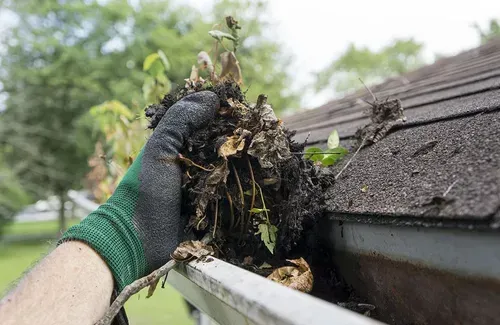
Yes, in the sense that you won't be dealing with leaking joints, but they still need the same debris cleaning as any gutter system. Leaves and shingle grit build up in seamless and sectional gutters equally — the material doesn't stop clogs, it just stops leaks at the seams.
Can I upgrade from sectional to seamless later?
Yes. It's a straightforward replacement project since the fascia and downspout locations are usually already in place. Most homeowners do this when they're already having roof or siding work done, since the crew and equipment are on-site anyway.
If you're weighing seamless against sectional gutters for your Quad Cities home, schedule a free estimate with Twin Bridge Roofing & Construction or call (309) 948-4126. We'll look at your roofline in person and give you honest numbers for both options. Done Right. Done Forever.
