Why Spring Rain Exposes Failed Caulk Joints Around Siding in the Quad Cities
Why Spring Rain Exposes Failed Caulk Joints Around Siding in the Quad Cities
As spring rain settles into the Quad Cities, homeowners often notice water staining, peeling paint, or damp areas near windows and doors. While these issues are sometimes blamed on siding itself, a very common culprit is much smaller and easier to overlook: failed exterior caulk joints.
Homes in Rock Island, Moline, Davenport, Bettendorf, and Milan endure months of freezing temperatures, snow accumulation, and fluctuating humidity. By the time April rain arrives, caulk joints around siding, trim, windows, and doors may already be compromised. Spring rain is often the first time these failures reveal themselves.
Understanding how caulk joints fail, why spring rain makes the problem obvious, and where to look can help homeowners prevent moisture intrusion that leads to more extensive exterior and interior damage.
What Exterior Caulk Is Designed to Do
Caulk acts as a flexible seal at transitions.
The role of exterior caulk
Proper exterior caulking:
Seals gaps between siding and trim
Protects window and door perimeters
Blocks wind-driven rain
Allows controlled movement between materials
Caulk is not structural, but it is critical for moisture control.
Why Winter Is Hard on Caulk Joints
Caulk is constantly stressed during Midwest winters.
Freeze–thaw impact
During winter:
Materials expand and contract
Moisture freezes inside tiny gaps
Caulk stretches and compresses repeatedly
Over time, this movement causes caulk to lose adhesion or elasticity.
Why Spring Rain Reveals the Problem
Caulk failures often stay hidden until sustained moisture arrives.
What changes in April
Spring brings:
Prolonged rainfall instead of snow
Warmer temperatures that soften materials
Water flowing across exterior surfaces
Rain finds the smallest failed joint and exploits it quickly.
Common Areas Where Caulk Fails First
Not all caulk joints fail at the same rate.
High-risk locations
Caulk failures commonly appear:
Around window and door trim
Where siding meets trim boards
At corner boards
Along utility penetrations
These areas experience the most movement and moisture exposure.
Why Failed Caulk Allows Water Behind Siding
Caulk is often the first line of defense.
Moisture pathways
When caulk fails:
Water slips behind trim
Moisture reaches house wrap
Drainage may be disrupted
Walls stay damp longer
Once behind the siding, water relies on proper drainage to escape.
Why Caulk Failure Is Often Misdiagnosed
Caulk problems are easy to miss.
Why homeowners overlook it
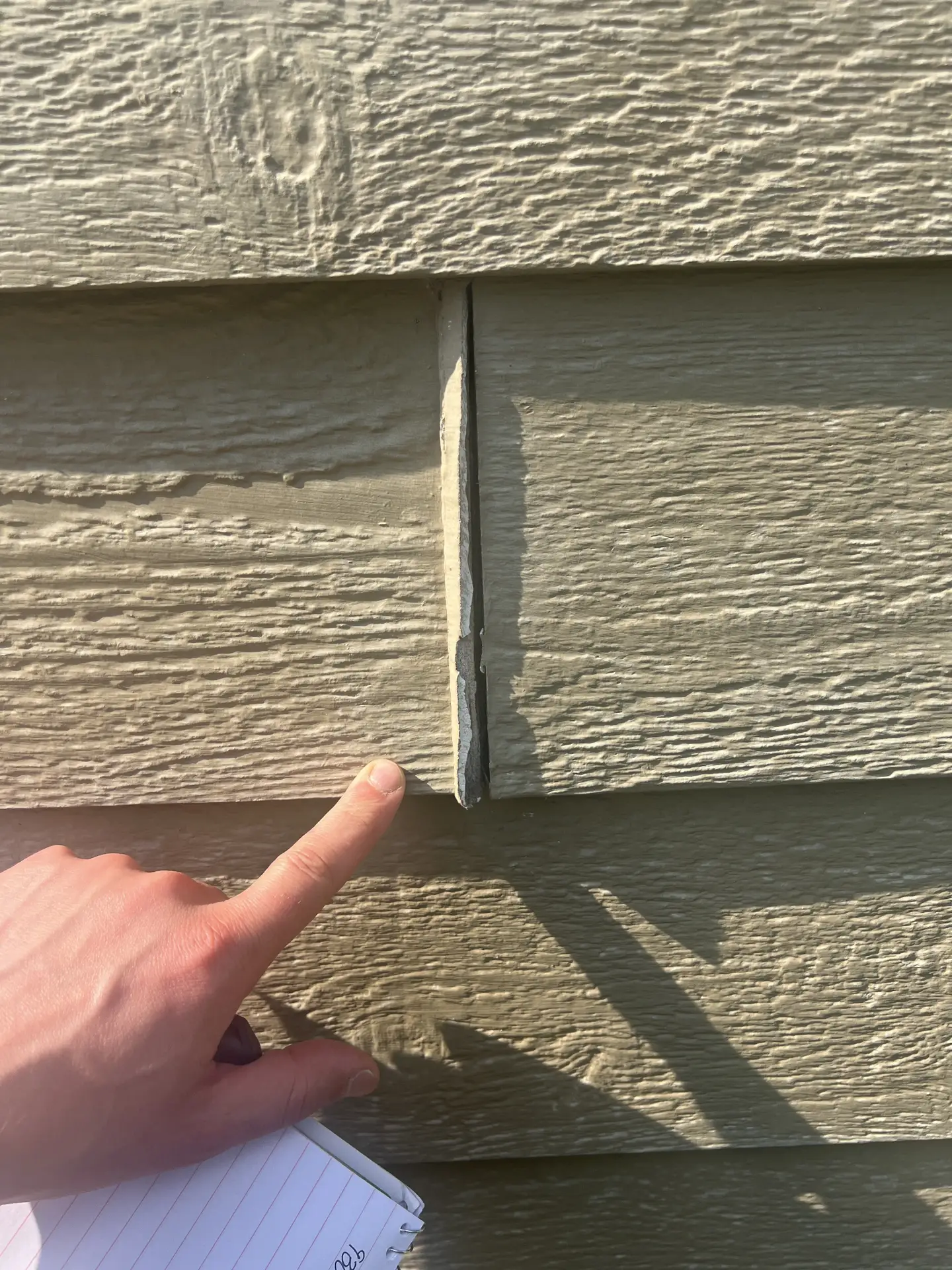
Cracks can be hairline
Caulk may look intact from the ground
Damage appears indoors first
By the time symptoms are obvious, moisture may already be affecting wall materials.
Interior Signs Linked to Exterior Caulk Failure
Exterior joint issues often show up inside.
Interior warning signs
Homeowners may notice:
Bubbling or peeling paint
Soft drywall near windows
Musty odors near exterior walls
Minor leaks during steady rain
These signs often trace back to failed caulk joints outside.
Why Re-Caulking Isn’t Always a Simple Fix
Not all caulk repairs are equal.
Common mistakes
Improper caulking can:
Trap moisture inside walls
Fail quickly due to poor adhesion
Crack again with temperature changes
Using the right materials and techniques is essential for durability.
How Caulk Failure Affects Siding Performance
Caulk issues can compromise the entire siding system.
Long-term effects
Ongoing moisture intrusion can:
Damage wall sheathing
Reduce insulation effectiveness
Lead to mold or mildew
Accelerate siding deterioration
What starts as a small joint failure can escalate if ignored.
Why April Is the Best Time to Inspect Caulk Joints
Timing matters for exterior evaluations.
Benefits of spring inspection
April inspections:
Reveal winter-related failures
Allow repairs before summer humidity
Prevent moisture from being trapped by heat
Early correction limits damage progression.
How Professional Inspections Evaluate Caulk Conditions
Caulk inspection requires close attention.
What inspectors assess
A professional inspection includes:
Checking adhesion and flexibility
Identifying cracked or separated joints
Evaluating moisture pathways
Assessing adjacent siding and trim
This ensures repairs address the cause, not just the symptom.
Why Local Experience Matters With Caulk Failures
Midwest homes experience unique movement patterns.
A local contractor understands:
Quad Cities temperature swings
Seasonal moisture behavior
Common failure points in local construction
That experience leads to accurate recommendations and longer-lasting repairs.
When Homeowners Should Schedule an Inspection
An exterior inspection is recommended if:
Spring rain reveals leaks near windows or doors
Trim paint is peeling or bubbling
Caulk looks cracked or separated
Siding hasn’t been inspected recently
Early action prevents hidden damage.
Small Joints, Big Impact
Caulk joints may be small, but they play a major role in protecting your home from spring moisture. When winter stress meets April rain, failures become visible quickly. Addressing caulk issues early helps preserve siding, walls, and interior finishes.
Schedule a Free Exterior Inspection
If you’re noticing water issues around windows, doors, or siding this spring, a professional inspection can help identify failed caulk joints before damage spreads. Twin Bridge Roofing & Construction is a licensed and insured roofing & siding contractor serving the Quad Cities, offering free, no-obligation inspections to evaluate siding, trim, and exterior moisture protection.
📞 Call or text 309-948-4126
🌐 Visit roofqc.com to schedule your inspection online
