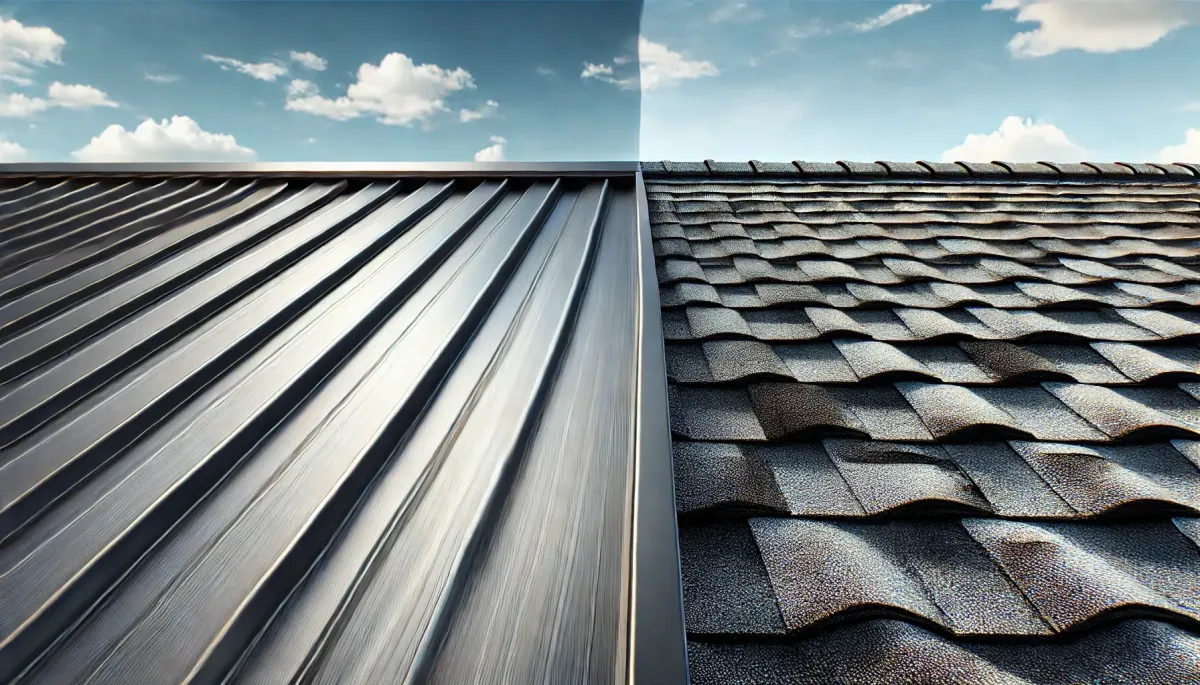
Standing Seam Metal Roofing: Is It Worth the Investment for Quad Cities Homes?
Standing seam metal roofing typically costs two to three times more than asphalt shingles upfront, but for Quad Cities homeowners planning to stay in their home long-term, its 40- to 70-year lifespan, strong wind and snow-load performance, and lower long-term maintenance costs make it a worthwhile investment in most cases. Whether it's the right call for your specific home depends on how long you plan to stay, your budget, and how much you value not thinking about your roof again for decades.
Metal roofing has grown more popular across Rock Island, Scott, and Henry County in recent years, and standing seam is the style homeowners ask about most. Here's an honest look at what it actually costs, how it performs in Midwest weather, and who it makes the most sense for.
What Makes Standing Seam Different From Other Metal Roofing?
Standing seam panels are long, vertical metal sheets connected by raised interlocking seams, with no exposed fasteners on the visible surface. That's the key difference from exposed-fastener metal panels (sometimes called corrugated or R-panel roofing): the screws that hold a standing seam roof down are hidden under the seam, protected from weather. Exposed-fastener systems are cheaper, but those screws sit under a rubber washer that degrades over time — every one is a potential future leak point. Standing seam avoids that problem entirely, which is a big part of why it costs more.
How Does Standing Seam Perform in Quad Cities Weather?
This is where standing seam earns its reputation. Midwest weather puts a lot on a roof in a single year — hailstorms, high winds, heavy snow loads, and repeated freeze-thaw cycles — and standing seam handles all of it well:
- Wind resistance: Properly installed standing seam roofs are rated to withstand winds well beyond what a typical Quad Cities storm produces, often 140 mph or higher depending on the system.
- Snow and ice shedding: The smooth vertical panels shed snow more effectively than shingles, reducing the ice dam risk that plagues many Midwest roofs each winter.
- Hail performance: Standing seam won't crack or lose granules the way asphalt shingles can. Cosmetic denting is possible in severe hail, but the roof's watertight integrity typically isn't compromised.
- Longevity: A well-installed standing seam roof commonly lasts 40 to 70 years — several times longer than a 20- to 30-year asphalt shingle roof — with minimal maintenance in between.
What Does Standing Seam Metal Roofing Cost Compared to Asphalt?
Asphalt shingles remain the most affordable option for a Quad Cities roof replacement, and for many homeowners — especially those who don't plan to stay in the home for decades — that's the right economic call. Standing seam sits at the premium end of roofing materials, generally running two to three times the cost of a comparable asphalt shingle installation. The gap comes from material costs, more specialized installation labor, and the custom fabrication many standing seam systems require.
Where the math changes is over time. Because standing seam rarely needs repair or replacement within a typical homeownership span, the total cost of ownership — factoring in that most asphalt roofs need replacing once or even twice over the same period — narrows considerably. Homeowners who plan to stay in their Quad Cities home for 15+ years, or who want to stop budgeting for roof replacement altogether, get the most value out of that upfront premium.
Is Standing Seam the Right Choice for Your Home?
Standing seam tends to make the most sense for homeowners who fall into one or more of these categories: staying long-term in the home, wanting to minimize maintenance and future roofing decisions, prioritizing storm resilience in a region that sees regular hail and wind events, or planning to add solar in the future, since standing seam panels allow for clamp-on solar mounting that doesn't penetrate the roof. If your priority is the lowest upfront cost, or you're not planning to stay in the home long enough to capture the long-term value, asphalt shingles remain a smart, well-proven choice for Quad Cities homes.
Frequently Asked Questions
Is standing seam metal roofing noisy during rain or hail?
Not when installed correctly. A standing seam roof installed over solid decking and underlayment — the standard for residential installations — sounds no louder in rain than an asphalt shingle roof. The "noisy metal roof" reputation mostly comes from older barn-style installations without solid decking underneath.
Can standing seam be installed over an existing roof?
In most cases, no — a proper standing seam installation requires a full tear-off to the deck so the panels, underlayment, and flashing details are installed correctly. This is one reason the upfront cost is higher than some other metal roofing systems.
Does standing seam metal roofing increase resale value?
It can be a strong selling point, particularly for buyers who value low maintenance and long-term durability. That said, the resale impact varies by buyer and market, so it shouldn't be the sole reason to choose it — the performance and longevity benefits are the more reliable payoff.
How long does a standing seam roof installation take?
A typical residential installation takes several days to about a week, depending on the size and complexity of the roof, compared to one to two days for an asphalt shingle replacement. The custom panel fabrication and detailed seam work take more time than a standard shingle install.
If you're weighing standing seam metal roofing against asphalt for your Quad Cities home, Twin Bridge Roofing & Construction can walk you through real numbers for your specific roof. Schedule your free estimate or call us at (309) 948-4126. Done Right. Done Forever.
