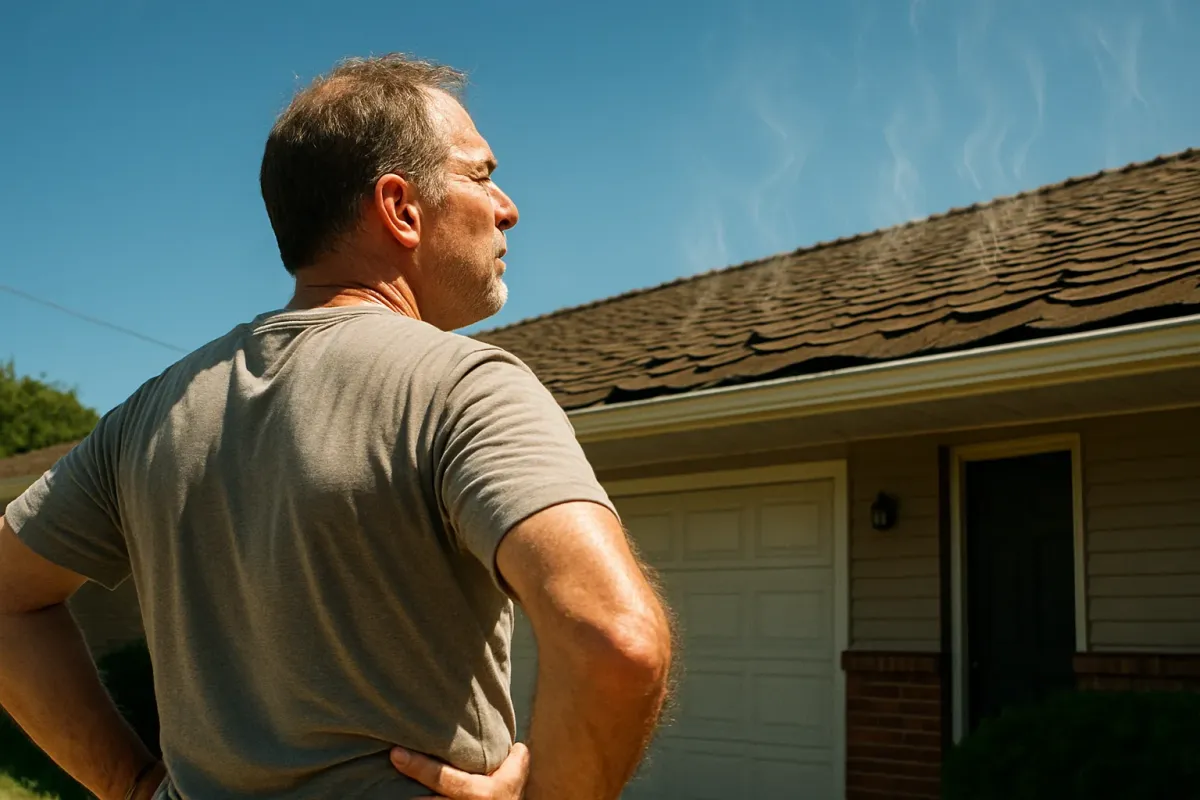
How Summer Heat Quietly Damages Roofs in the Quad Cities
How Summer Heat Quietly Damages Roofs in the Quad Cities
When homeowners in the Quad Cities think about roof damage, they usually picture storms—hail, high winds, or heavy rain. What often goes unnoticed is that summer heat alone can quietly weaken a roof, even when the weather looks calm.
In Rock Island, Moline, Davenport, Bettendorf, and Milan, extended heat waves, strong sun exposure, and high humidity place constant stress on roofing systems. Over time, this heat-related stress shortens roof lifespan and makes homes more vulnerable when storms eventually arrive.
Understanding how summer heat affects your roof helps explain why inspections during warm months are just as important as post-storm checks.
Why Heat Is One of the Roof’s Biggest Enemies
Roofing materials are designed to endure sun exposure—but only within limits.
What happens during prolonged heat
During Quad Cities summers:
Roof surface temperatures can exceed 150°F
Asphalt softens during the day
Materials cool rapidly overnight
This expansion and contraction repeats daily
This cycle places ongoing stress on shingles and underlying components.
How Heat Changes Shingle Performance
Heat doesn’t usually cause immediate leaks—but it weakens shingles over time.
Heat-related shingle changes
Prolonged heat can cause:
Loss of flexibility
Drying and oxidation of asphalt
Seal strip deterioration
Accelerated granule loss
Once shingles lose flexibility, they become more vulnerable to wind and rain.
Why South- and West-Facing Roof Slopes Suffer First
Not all roof areas receive equal sun exposure.
High-risk roof slopes
In the Midwest, the most heat-stressed areas are:
South-facing slopes
West-facing slopes
Areas without shade
Low-slope sections that retain heat
These slopes often age faster than the rest of the roof.
Heat Blistering: A Common but Misunderstood Issue
Blistering is a common heat-related condition.
What blistering looks like
Heat blisters appear as:
Small raised bubbles
Areas where granules loosen
Pitted or uneven shingle surfaces
Blistering weakens the shingle surface and exposes asphalt to UV damage.
Why Heat Damage Often Goes Unnoticed
Heat-related damage develops gradually.
Why homeowners miss it
No dramatic storm event
Damage develops evenly
Roof still “looks okay” from the ground
By the time problems appear, shingles may already be compromised.
How Heat Affects Seal Strips and Wind Resistance
Seal strips rely on proper adhesion to protect against wind.
Heat’s impact on seals
Extended heat can:
Over-dry adhesive strips
Reduce bonding strength
Cause partial separation
Once seal strips weaken, shingles lift more easily during wind events.
The Relationship Between Heat and Future Storm Damage
Heat damage sets the stage for later failures.
The chain reaction
Heat dries and stiffens shingles
Adhesives lose strength
Wind lifts weakened shingles
Water penetrates beneath
Leaks develop during storms
Many “storm failures” actually begin with heat stress.
Attic Heat and Roof Performance
Roof performance is influenced from below as well.
Why attic temperatures matter
Poor ventilation can:
Trap heat beneath the roof
Increase shingle temperatures
Accelerate material aging
Balanced attic ventilation helps regulate roof temperature and reduce heat stress.
Interior Clues That Heat Stress May Be Affecting Your Roof
Heat damage doesn’t stay outside forever.
Interior warning signs
Homeowners may notice:
Hot or stuffy attic spaces
Higher cooling costs
Uneven indoor temperatures
Increased humidity indoors
These issues often correlate with roof and ventilation performance.
Why Summer Inspections Are Often Overlooked
Many homeowners wait for storms to schedule inspections.
Why that’s a mistake
Summer inspections:
Catch heat damage early
Identify weakened shingles
Reduce fall and winter failures
Waiting until after storms often means damage has already progressed.
How Professional Inspections Evaluate Heat Stress
Heat damage requires trained evaluation.
What inspectors assess
Shingle flexibility
Granule retention
Seal strip adhesion
Blistering patterns
Ventilation balance
These indicators help determine how well the roof is handling summer conditions.
Why Local Experience Matters With Heat Damage
Midwest heat affects roofs differently than heat in other regions.
A local contractor understands:
Quad Cities summer patterns
How humidity impacts roofing materials
Which roof slopes fail first locally
That experience leads to accurate assessments and practical recommendations.
When Homeowners Should Schedule a Summer Roof Inspection
A summer inspection is recommended if:
Your roof is over 8–10 years old
You notice uneven shingle appearance
Cooling costs have increased
The roof faces heavy sun exposure
Catching heat damage early can extend roof life.
Summer Damage Is Quiet—but Real
Heat doesn’t tear roofs apart overnight. Instead, it weakens them quietly, day after day. Addressing heat-related stress early helps ensure your roof is ready for the next Midwest storm season.
Schedule a Free Roof Inspection
If your roof has endured prolonged summer heat—or you want peace of mind before the next storm season—a professional inspection can help. Twin Bridge Roofing & Construction is a licensed and insured roofing & siding contractor serving the Quad Cities, offering free, no-obligation inspections to evaluate heat-related wear and overall roof performance.
📞 Call or text 309-948-4126
🌐 Visit roofqc.com to schedule your inspection online
