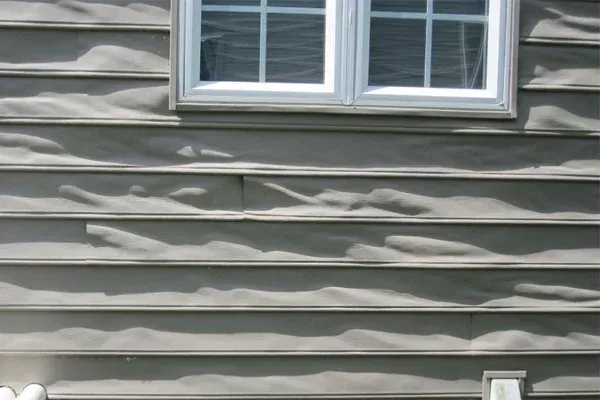
Why Vinyl Siding Warps From Heat in the Quad Cities (Even Without Storms)
Why Vinyl Siding Warps From Heat in the Quad Cities (Even Without Storms)
When vinyl siding begins to warp, bow, or ripple, many homeowners assume wind or poor installation is to blame. In the Quad Cities, however, heat is one of the most common causes of vinyl siding distortion, even when no storms or obvious damage have occurred.
Homes in Rock Island, Moline, Davenport, Bettendorf, and Milan experience strong summer sun, high humidity, and reflective heat from nearby surfaces. These conditions can push vinyl siding beyond its design limits, causing visible warping that affects both appearance and performance.
Understanding how heat warps vinyl siding—and why it often happens on specific parts of a home—helps homeowners recognize the issue early and avoid more extensive exterior repairs.
How Vinyl Siding Is Designed to Handle Heat
Vinyl siding is engineered to expand and contract.
Normal thermal movement
Under typical conditions, vinyl siding:
Slides slightly on fasteners
Expands during heat
Contracts as temperatures cool
This movement prevents cracking—but only within a controlled range.
When Heat Exceeds Vinyl’s Tolerance
Problems arise when vinyl siding gets too hot.
What causes excessive heat buildup
In the Quad Cities, siding temperatures increase due to:
Prolonged direct sunlight
Dark-colored siding absorbing heat
Reflected sunlight from windows or metal surfaces
Nearby concrete, driveways, or patios
In some cases, siding surface temperatures exceed safe limits.
Why Warping Often Appears in Specific Areas
Warping rarely affects the entire house evenly.
High-risk siding locations
Heat distortion is most common:
On south- and west-facing walls
Near large reflective windows
Above patios or concrete slabs
On walls with limited airflow
These areas trap heat longer and cool more slowly.
What Heat Warping Actually Looks Like
Heat damage has distinct visual signs.
Common warping indicators
Homeowners may notice:
Wavy or rippled siding lines
Panels bowing outward
Distorted seams or overlaps
Panels that don’t lay flat
This damage often worsens gradually over time.
Why Heat Warping Isn’t Always an Installation Issue
Warping is often blamed on improper nailing—but that’s not always accurate.
Heat vs installation
While tight nailing can contribute, heat warping can occur even when:
Siding was installed correctly
Fasteners allow proper movement
Panels were undamaged initially
Extreme heat alone can exceed vinyl’s tolerance.
How Warped Siding Affects Performance
Warping isn’t just cosmetic.
Functional risks of warped siding
Distorted siding can:
Break locking seams
Create gaps for water intrusion
Reduce wind resistance
Allow pests behind panels
Once siding warps, it no longer performs as designed.
Why Warped Panels Don’t “Settle Back”
Vinyl siding does not always return to its original shape.
Permanent distortion
After repeated heat exposure:
Panels lose memory
Distortion becomes permanent
Cooling doesn’t reverse damage
This is why warped siding often requires replacement rather than adjustment.
Interior Signs That Heat Warping May Be a Problem
Exterior distortion can lead to interior issues.
Interior warning signs
Homeowners may notice:
Hot wall surfaces indoors
Uneven room temperatures
Increased cooling costs
Drafts near exterior walls
These symptoms suggest siding is no longer sealing properly.
Why Heat Warping Gets Worse Over Time
Warped siding often escalates.
Escalation pattern
Heat causes initial distortion
Seams loosen
Wind stresses warped panels
Water intrusion increases
Damage spreads to surrounding panels
Early evaluation limits how far the problem spreads.
Why Midwest Summers Increase Risk
Quad Cities summers create unique conditions.
Regional factors
Local homes experience:
High humidity trapping heat
Long daylight hours
Rapid temperature swings between day and night
These conditions accelerate vinyl fatigue.
How Professional Inspections Evaluate Heat Damage
Heat-related siding issues require careful assessment.
What inspectors look for
Panel distortion patterns
Heat concentration zones
Fastener flexibility
Seam integrity
Signs of water intrusion
This helps determine whether warping is isolated or systemic.
When Homeowners Should Schedule an Inspection
A siding inspection is recommended if:
Panels appear wavy or bowed
Distortion worsens in summer
Cooling costs rise unexpectedly
Siding faces strong sun exposure
Early action can prevent full-wall replacement.
Heat Damage Is Quiet—but Serious
Vinyl siding doesn’t need storms to fail. In many Quad Cities homes, heat alone causes long-term distortion that compromises protection and appearance. Recognizing the signs early keeps repairs manageable.
Schedule a Free Siding Inspection
If your siding looks warped, bowed, or uneven—especially after hot weather—a professional inspection can help identify heat-related damage before it spreads. Twin Bridge Roofing & Construction is a licensed and insured roofing & siding contractor serving the Quad Cities, offering free, no-obligation inspections to evaluate siding condition and performance.
📞 Call or text 309-948-4126
🌐 Visit roofqc.com to schedule your inspection online
