Warning Signs Your Roof Decking May Be Compromised
Warning Signs Your Roof Decking May Be Compromised
When homeowners think about roof problems, shingles usually get all the attention. But underneath every roofing system is a critical structural component that often determines how serious a problem really is: the roof decking.
In the Quad Cities, roof decking takes a beating from Midwest weather year after year. Wind-driven rain, snow load, ice dams, humidity, and repeated freeze-thaw cycles can all weaken decking long before obvious leaks appear. By the time damage is visible inside the home, the decking may already be compromised.
Understanding how roof decking fails—and the warning signs to watch for—can help homeowners in Rock Island, Moline, Davenport, Bettendorf, and Milan prevent major structural repairs.
What Roof Decking Does
Roof decking (also called sheathing) is the solid surface beneath shingles that gives the roof its strength.
The role of roof decking
Decking:
Supports the weight of shingles and roofing materials
Provides structural rigidity
Acts as the base layer for underlayment
Helps distribute wind and snow loads
When decking is compromised, even a brand-new shingle roof can fail.
Why Midwest Weather Is Hard on Roof Decking
Decking problems are especially common in Illinois and Iowa.
Regional stress factors
Quad Cities homes face:
Heavy snow loads that sit for weeks
Ice dams that trap moisture at roof edges
Wind-driven rain that finds small openings
High summer humidity that slows drying
Freeze-thaw cycles that expand wet wood
Wood decking that repeatedly gets wet and dries unevenly weakens over time.
How Decking Damage Starts
Decking damage rarely happens all at once.
Common causes of compromised decking
Long-term minor leaks
Ice dam water backup
Flashing failures near chimneys or walls
Wind-driven rain entering through lifted shingles
Condensation from poor attic ventilation
Many of these issues don’t cause immediate interior leaks.
Exterior Warning Signs Homeowners Can See
You don’t need to climb on the roof to spot potential decking issues.
Ground-level signs to watch for
Sagging roof lines or dips between rafters
Shingles that appear uneven or sunken
Roof sections that look wavy instead of flat
Repeated shingle failures in the same area
These signs often indicate soft or deteriorating decking beneath the shingles.
Interior Signs of Decking Problems
Decking damage often reveals itself inside the home before shingles fail completely.
Interior warning signs
Ceiling stains that spread or reappear
Musty odors in upper rooms
Spongy feeling when walking in attic areas
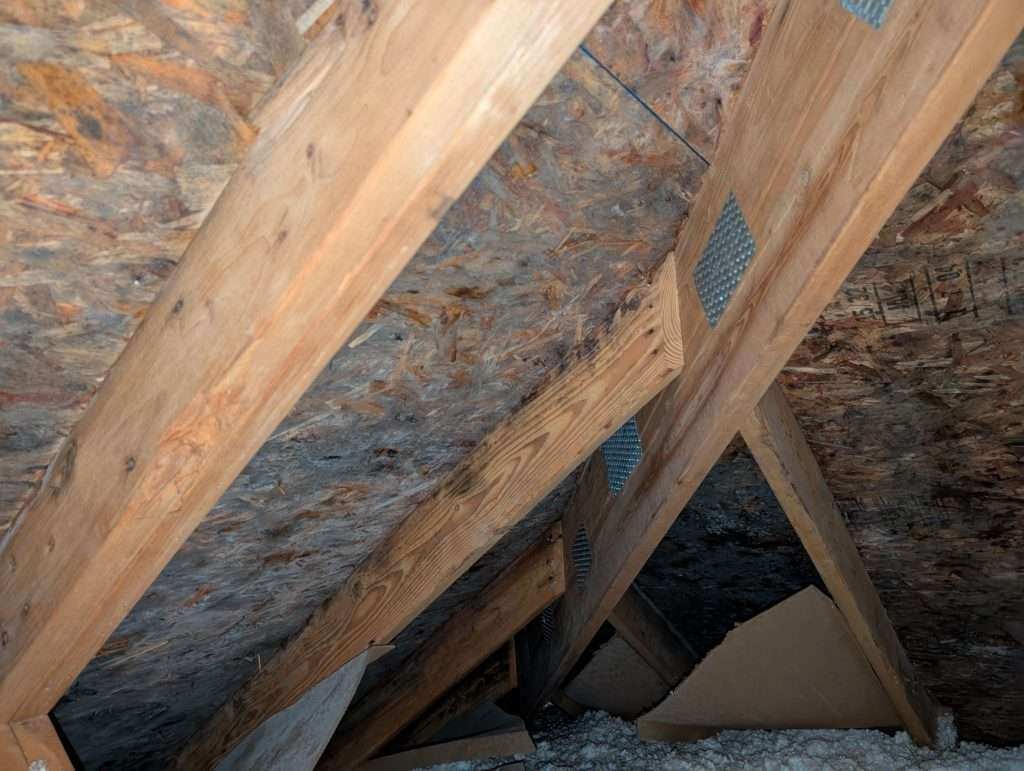
Darkened or stained decking visible from the attic
If decking feels soft underfoot in the attic, structural damage is likely already present.
Why Soft Decking Is a Serious Issue
Soft or weakened decking compromises the entire roofing system.
Risks of compromised decking
Shingles can’t fasten securely
Wind resistance is reduced
Leaks spread more easily
Repairs become more extensive
Installing new shingles over damaged decking is never a long-term solution.
Ice Dams and Decking Rot
Ice dams are a leading cause of decking rot in the Midwest.
How ice dams damage decking
When ice blocks drainage:
Meltwater backs up under shingles
Water saturates decking at the eaves
Wood stays wet for extended periods
Repeated winters accelerate rot at roof edges, even if shingles appear intact.
Ventilation’s Role in Decking Health
Poor attic ventilation increases moisture levels inside the attic.
Ventilation-related decking damage
When warm, moist air becomes trapped:
Condensation forms on cold decking
Wood absorbs moisture repeatedly
Mold and rot can develop
Balanced intake and exhaust ventilation helps keep decking dry year-round.
Why Decking Problems Are Often Missed
Decking issues are hidden by design.
Common reasons damage goes unnoticed
Shingles mask the problem
Leaks travel before appearing
Damage progresses slowly
Homeowners focus only on surface materials
By the time decking failure is obvious, repairs are often larger.
How Professional Inspections Detect Decking Issues
A professional inspection looks beyond surface materials.
What professionals evaluate
Roof plane straightness
Shingle fastening behavior
Attic moisture indicators
Decking condition from inside the attic
Areas prone to recurring leaks
Early detection can limit decking replacement to small sections instead of full areas.
Why Decking Condition Affects Insurance Decisions
Insurance claims often depend on whether damage is sudden or long-term.
Why documentation matters
Decking rot may be classified as wear if undetected
Early inspections establish timelines
Proper documentation supports storm-related causes
Knowing the condition of your decking protects future options.
Local Experience Makes the Difference
Midwest decking failures follow predictable patterns. A local contractor understands:
Where Quad Cities homes typically rot first
How storm patterns affect decking
How ice dams and ventilation interact
That experience leads to accurate assessments and smarter repair planning.
Schedule a Free Roof Decking Inspection
If you’ve noticed sagging roof lines, recurring leaks, or attic moisture, your roof decking may need attention. Twin Bridge Roofing & Construction is a licensed and insured roofing & siding contractor serving the Quad Cities, offering free, no-obligation inspections to evaluate roof decking and overall roof health.
📞 Call or text 309-948-4126 to schedule your inspection
🌐 Visit roofqc.com to request an appointment online
