Wind-Driven Rain: Why “Good” Roofs Still Leak in the Quad Cities
Wind-Driven Rain: Why “Good” Roofs Still Leak in the Quad Cities
One of the most frustrating things Quad Cities homeowners hear after a storm is: “Your roof looks fine.” Yet during the next heavy rain—especially one driven by strong wind—water shows up where it shouldn’t. Ceilings stain, walls feel damp, or musty odors appear, even though shingles aren’t missing and the roof isn’t old.
In the Midwest, wind-driven rain is one of the most common causes of leaks on otherwise functional roofs. Homes in Rock Island, Moline, Davenport, Bettendorf, and Milan are especially vulnerable due to frequent storms that combine rain, wind, and pressure changes.
Understanding how wind-driven rain works explains why leaks can happen even when a roof appears to be in good condition.
What Wind-Driven Rain Is (and Why It’s Different)
Wind-driven rain isn’t just heavy rain—it’s rain pushed sideways or upward by strong gusts and pressure changes during storms.
How wind changes rain behavior
During Midwest storms:
Rain doesn’t fall straight down
Wind pushes water horizontally
Gusts force water up roof slopes
Pressure changes drive water into seams
This allows water to reach areas that normal rainfall never touches.
Why Wind-Driven Rain Defeats “Good” Roofs
Roofs are designed to shed water downward—not to resist sideways force.
Where water finds entry points
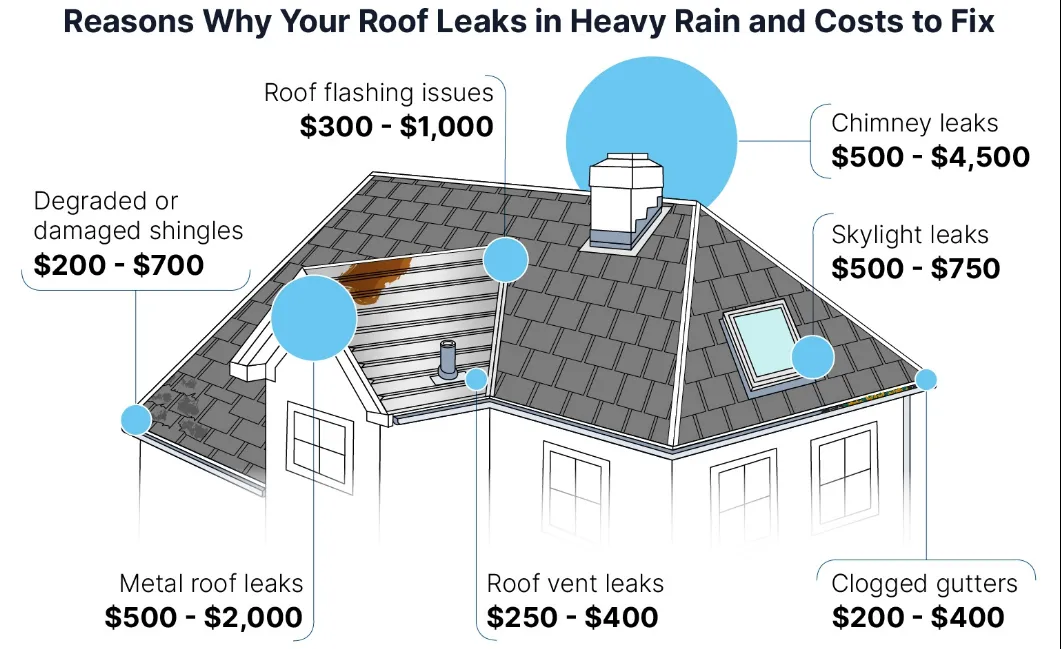
Wind-driven rain commonly exploits:
Flashing seams
Shingle edges
Roof-to-wall intersections
Chimneys and vents
Siding seams near rooflines
Even properly installed roofs can struggle when wind and rain combine.
Flashing Is the Most Common Failure Point
Flashing is designed to redirect water—but it has limits.
Why flashing fails during wind-driven rain
Flashing problems often occur when:
Sealants dry or crack
Metal expands and contracts
Fasteners loosen over time
Siding interferes with proper overlap
Wind pushes water behind flashing rather than letting gravity do the work.
Roof-to-Wall Intersections Are Especially Vulnerable
Any place where a roof meets a vertical wall is a high-risk zone.
Why these areas leak during storms
Step flashing may be hidden behind siding
Wind pushes water behind trim
Water travels downward inside wall cavities
Leaks from these areas often appear far from the actual entry point.
Why Leaks Only Happen During Certain Storms
Many homeowners notice leaks that appear only during specific storms.
Why leaks seem inconsistent
Wind-driven rain depends on:
Wind direction
Gust intensity
Rain volume
Storm duration
A roof may handle normal rain just fine but leak during one storm with the right wind angle.
Siding Plays a Role in Wind-Driven Rain Leaks
Siding systems aren’t waterproof—they rely on overlap and drainage.
How siding contributes to leaks
During wind-driven rain:
Water can be forced behind siding seams
Trim gaps allow entry
Moisture travels downward behind panels
When siding and roof systems interact poorly, leaks become more likely.
Interior Warning Signs of Wind-Driven Rain Damage
Wind-driven rain often leaves subtle interior clues.
Signs homeowners should watch for
Stains near exterior walls
Damp smells after storms
Bubbling paint near ceilings
Wet insulation in attic spaces
Drips that stop when rain ends
These symptoms often point to flashing or roof-to-wall issues.
Why Midwest Storm Patterns Make This Worse
The Quad Cities see frequent storm systems with:
Fast-moving fronts
Strong straight-line winds
Rapid pressure changes
Repeated rainfall events
These conditions make wind-driven rain more common than many homeowners realize.
Why DIY Fixes Rarely Solve the Problem
Surface repairs often miss the real cause.
Why caulk alone isn’t enough
Caulk cracks with temperature swings
It doesn’t address water pathways
It fails under wind pressure
Proper solutions rely on layered flashing and drainage, not just sealant.
How Professional Inspections Find the True Source
Wind-driven rain leaks are difficult to trace.
What professionals evaluate
Flashing overlap and integration
Roof-to-wall detailing
Shingle edge behavior
Siding interaction points
Moisture migration paths
This system-level approach is key to solving intermittent leaks.
Why Early Detection Saves Money
Wind-driven rain leaks often start small.
What happens if they’re ignored
Moisture spreads inside walls
Insulation becomes saturated
Mold risk increases
Structural repairs become necessary
Catching issues early keeps repairs focused and affordable.
Local Experience Makes the Difference
Midwest storm behavior isn’t the same everywhere. A local contractor understands:
Quad Cities wind patterns
Common leak points on local homes
How seasonal weather compounds damage
That experience leads to accurate diagnosis and lasting repairs.
Schedule a Free Storm Leak Inspection
If your roof only leaks during heavy or windy rain—or you’ve noticed unexplained interior moisture after storms—a professional inspection can help identify the cause. Twin Bridge Roofing & Construction is a licensed and insured roofing & siding contractor serving the Quad Cities, offering free, no-obligation storm inspections to catch wind-driven rain issues early.
📞 Call or text 309-948-4126 to schedule your inspection
🌐 Visit roofqc.com to request an appointment online
