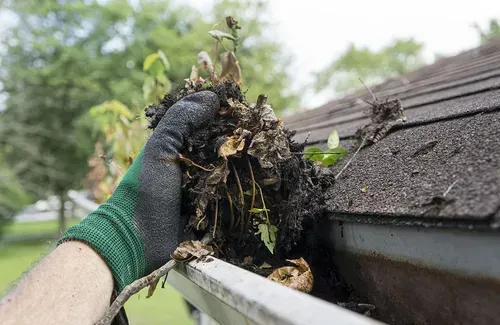
How to Winterize Your Gutters Before the First Quad Cities Freeze
Winterizing your gutters means clearing out every leaf and seed pod, confirming downspouts carry water at least 5 feet from your foundation, and checking for loose brackets or sagging sections — and in the Quad Cities, you want this done before the first hard freeze, which usually arrives by mid-to-late November. Skip it, and the first cold snap turns whatever's sitting in your gutters into a solid block of ice. That ice backs water up under your shingles, pulls brackets away from the fascia, and sends overflow straight down toward your foundation instead of away from it.
None of this is complicated work. It's the kind of 45-minute job that gets pushed to "next weekend" until the first freeze makes the decision for you. Here's what actually needs to happen, and why timing matters more in this region than most homeowners realize.
Why Does Winterizing Matter So Much in the Quad Cities?
Quad Cities winters don't just get cold — they swing. A 40-degree afternoon followed by a 15-degree night is a normal week here from November through February. That freeze-thaw cycle is exactly what turns a gutter full of wet leaves into an ice dam. Water that can't drain freezes, expands, and works its way under shingles and behind fascia boards. Once that happens, you're not looking at a gutter problem anymore — you're looking at roof deck rot, soffit damage, or water intrusion into your attic.
Homes in Rock Island, Moline, Davenport, Bettendorf, and the surrounding towns all face the same pattern. The ones that get through winter clean are almost always the ones where gutters were cleared and checked before the first real freeze, not after.
When Should You Winterize Your Gutters?
The target window is after your trees have dropped most of their leaves but before the ground freezes — typically early-to-mid November for most of the Quad Cities. Waiting until a storm is forecast is too late; you want this done on a dry, mild day when you can actually see what's in the gutter and work safely on a ladder.
If you've got mature oaks or maples near your roofline, plan on a second pass in late November, since those trees tend to drop leaves in stages rather than all at once.
What Happens If You Skip It?
The short answer: water goes where you don't want it. Clogged gutters that freeze solid can't handle the next thaw or the next snowmelt, so water spills over the sides instead of through the downspouts. That overflow runs down your siding, pools at your foundation, and in bad cases seeps into a basement or crawl space. On the roof side, standing water that freezes at the gutter line is one of the most common causes of ice dams — and ice dams are one of the most expensive problems we see every January and February across the Quad Cities.
How to Winterize Your Gutters: The Checklist
You don't need to overthink this. Work through it in order:
- Clear every section by hand. Leaves, seed pods, and granule buildup all need to come out — a hose alone won't move wet, packed debris.
- Flush with a hose and watch where the water goes. If it backs up instead of flowing to the downspout, you've got a blockage or a low spot in the run.
- Check downspout extensions. Water needs to land at least 5 feet from your foundation, not dump straight against the wall.
- Look for sagging sections or loose brackets. A gutter that's pulling away from the fascia now will be worse once it's loaded with ice.
- Inspect the fascia and roof edge while you're up there. Soft wood, peeling paint, or dark staining behind the gutter are early signs of a leak that's already started.
- Trim back overhanging branches. Fewer leaves falling into a clean gutter means less work next spring, too.
Should You Hire a Professional or Do It Yourself?
A single-story home with easy roof access is a reasonable DIY job if you're comfortable on a ladder and have the right tools. Two-story homes, steep rooflines, or gutters you haven't been able to keep up with during the year are a different story — that's where a fall ladder accident or a missed problem (a cracked hanger, a hairline fascia split) turns into a much bigger repair. If it's been more than a year since your gutters were professionally inspected, it's worth having someone take a look while they're already up there clearing debris.
Can gutters actually freeze solid in the Quad Cities?
Yes. Standing water in a clogged gutter freezes the same way a puddle in your driveway does, and once it's solid, there's nowhere for the next rain or snowmelt to go but over the edge. It's one of the most common calls we get once temperatures drop.
How often should gutters be cleaned before winter hits?
Most Quad Cities homes need at least one thorough fall cleaning after leaves have mostly dropped, plus a quick follow-up check in late November if you have heavy tree cover. Homes with few or no overhanging trees can often get by with one pass.
Do gutter guards mean I can skip winterizing?
No. Gutter guards reduce how much debris gets in, but they don't eliminate it, and they don't fix sagging brackets, misaligned downspouts, or existing ice dam risk. They're a maintenance reducer, not a replacement for a fall check.
What does it typically cost if neglected gutters cause damage?
It depends entirely on what fails — a fascia repair is a modest fix, while a full ice dam that's pushed water into your attic or walls can run into the thousands once drywall, insulation, and roofing repairs are involved. Winterizing gutters is a fraction of the cost of any of those outcomes.
If your gutters haven't been checked this fall, don't wait for the first freeze to find out where the weak points are. Schedule a free inspection with Twin Bridge Roofing & Construction or call us at (309) 948-4126 — we'll check your gutters, downspouts, and roof edge together so nothing gets missed. Done Right. Done Forever.
