ACV vs RCV: Why Roof Insurance Payouts Look Different in the Quad Cities
ACV vs RCV: Why Roof Insurance Payouts Look Different in the Quad Cities
After a storm, many Quad Cities homeowners are surprised when their insurance payout doesn’t match the cost of repairs. The roof needs work, the estimate is clear—yet the check is smaller than expected. The reason usually comes down to how the policy values damage: Actual Cash Value (ACV) or Replacement Cost Value (RCV).
For homeowners in Rock Island, Moline, Davenport, Bettendorf, and Milan, understanding the difference between ACV and RCV helps explain payout timing, out-of-pocket expectations, and what steps may be required to recover full benefits. This isn’t just insurance jargon—it directly affects how and when repairs can move forward.
What ACV and RCV Actually Mean
These two terms describe how insurance calculates payment.
Actual Cash Value (ACV)
ACV considers:
The replacement cost of the damaged item
Minus depreciation for age, wear, and condition
In short, ACV reflects what the damaged roof was worth right before the loss.
Replacement Cost Value (RCV)
RCV considers:
The full cost to replace the damaged materials with like kind and quality
Without subtracting depreciation (once conditions are met)
RCV is designed to make the homeowner whole—but often in stages.
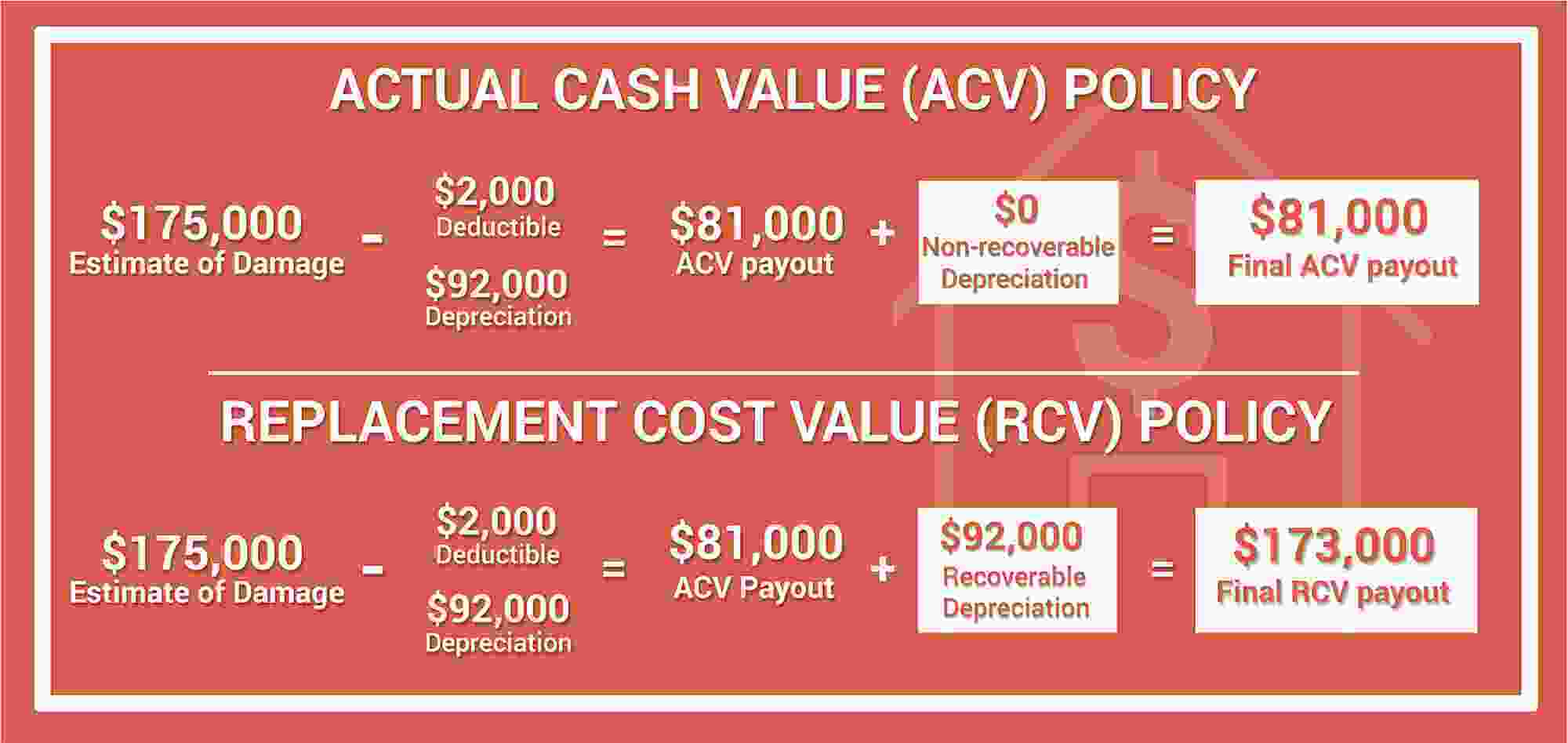
Why Many Roof Claims Start With an ACV Payment
Even RCV policies often pay ACV first.
How the payment process commonly works
On an RCV policy:
Insurance issues an initial ACV payment
Repairs are completed
The recoverable depreciation is released
This structure ensures repairs actually occur before full funds are paid.
What Depreciation Really Is (and Isn’t)
Depreciation is one of the most misunderstood parts of a claim.
How depreciation is calculated
Depreciation is typically based on:
Roof age
Expected service life
Observed condition
A 12-year-old roof with a 25-year lifespan may have significant depreciation—even if it was performing well before the storm.
What depreciation is not
Depreciation does not mean:
The roof wasn’t damaged
Coverage doesn’t apply
The claim is denied
It simply affects the timing and amount of payment.
ACV Policies vs RCV Policies in Practice
The policy type makes a big difference.
ACV-only policies
With ACV policies:
There is no recoverable depreciation
The ACV payment is typically the final payment
Out-of-pocket costs are higher
These policies are more common on older homes or lower premiums.
RCV policies
With RCV policies:
Depreciation is recoverable after repairs
Final payout is closer to full replacement cost
Documentation and completion matter
Understanding which policy you have is critical before repairs begin.
Why Payouts Can Look Low at First
The initial check often causes confusion.
Common reasons first payments are smaller
Depreciation withheld
Deductible applied
Partial scope approved initially
This doesn’t always mean insurance is underpaying—it may mean the process isn’t finished.
The Role of Proof of Completion
Recoverable depreciation requires verification.
What insurers typically require
To release depreciation, insurers usually ask for:
Proof repairs were completed
Invoices or contracts
Photos of completed work
Without this step, depreciation may never be paid—even on RCV policies.
How ACV vs RCV Affects Repair Decisions
Policy type influences homeowner choices.
Planning considerations
Homeowners should consider:
Whether funds cover immediate repairs
Timing of additional payments
Financing gaps created by depreciation
Scope of work needed to protect the home
Knowing the policy type helps avoid delays or incomplete repairs.
Why Midwest Roofs Feel Depreciation More
Regional weather affects roof aging.
Quad Cities factors
Local roofs experience:
Freeze-thaw cycles
Hail and wind exposure
Humidity swings
These factors accelerate wear, which can increase depreciation on paper—even when damage is storm-related.
Common Misunderstandings About ACV and RCV
Misconceptions create frustration.
Frequent misunderstandings
“RCV means I get the full amount upfront”
“Depreciation means the roof was already bad”
“ACV means insurance didn’t cover the loss”
Understanding the structure prevents unnecessary stress.
Why Documentation Matters With Either Policy
Clear documentation helps regardless of policy type.
Helpful documentation includes
Pre-storm roof condition notes
Photos and inspection reports
Clear repair invoices
Good documentation supports smoother claim resolution.
When to Ask Questions About Your Policy
Homeowners should seek clarification if:
The payout doesn’t match expectations
Depreciation seems unusually high
The policy type isn’t clear
Asking early avoids delays later.
Insurance Value Is Only Part of the Equation
Insurance determines payment—but roof performance determines protection. Even with an ACV policy, timely repairs may be necessary to prevent further damage, regardless of payout structure.
Schedule a Free Roof & Claim Review Inspection
If you’re unsure whether your policy is ACV or RCV—or how depreciation affects your roof claim—a professional inspection can help clarify your options. Twin Bridge Roofing & Construction is a licensed and insured roofing & siding contractor serving the Quad Cities, offering free, no-obligation inspections to help homeowners understand roof condition, insurance valuation, and next steps.
📞 Call or text 309-948-4126
🌐 Visit roofqc.com to schedule your inspection online
