How to Read Your Insurance Estimate After a Roof Claim
Your insurance estimate is a line-item breakdown of what your insurer believes it will cost to repair or replace your roof — and the two numbers that matter most are RCV (replacement cost value) and ACV (actual cash value), because the gap between them is money you may still be owed. If you've never read a Xactimate-style estimate before, the format can look like a wall of codes and abbreviations. Here's how to read it line by line so you know exactly what you're getting paid for, and what to flag before you sign off.
What Are the Key Sections of a Roof Insurance Estimate?
Most Quad Cities insurers use estimating software like Xactimate, which breaks your claim into a few standard sections: a summary page showing total RCV, total ACV, and your deductible; a line-item breakdown listing every material and labor cost (tear-off, underlayment, shingles, flashing, ridge vent, cleanup); and a depreciation schedule showing how much was withheld and why. If your claim also includes siding, gutters, or interior damage, those show up as separate line-item groups within the same estimate.
Each line item typically lists a quantity, a unit price, and a total — for example, "30-yr composition shingle roofing, 42 SQ, $XXX/SQ." Reviewing these line by line lets you compare what the adjuster measured against what's actually on your roof, which matters if your roof has multiple layers, steep pitches, or extra features like skylights and chimneys that increase labor cost.
What's the Difference Between RCV and ACV on Your Estimate?
RCV is what it costs to fully replace your roof with new materials at today's prices. ACV is RCV minus depreciation — the estimated wear and tear your old roof had already accumulated before the damage. Most policies pay ACV first, then release the "recoverable depreciation" once the work is complete and you submit your final invoice. If your estimate only shows one number, ask your adjuster directly whether depreciation was withheld and how to recover it.
This is also where deductible comes in: your deductible is subtracted from the ACV payment, not from the RCV total, so don't be alarmed if your first check looks smaller than the number at the top of the estimate.
What Does "Overhead and Profit" Mean on a Contractor Estimate?
Overhead and profit (O&P) is a standard line — usually 10% overhead and 10% profit — added when a claim requires coordinating multiple trades (for example, roofing plus siding plus gutters). Insurers include it because managing several contractors on one job is legitimately more complex than a single-trade repair. If your estimate doesn't include O&P but your project genuinely needs multiple trades, that's worth raising with your adjuster or public adjuster.
How Do You Know If Your Estimate Is Missing Something?
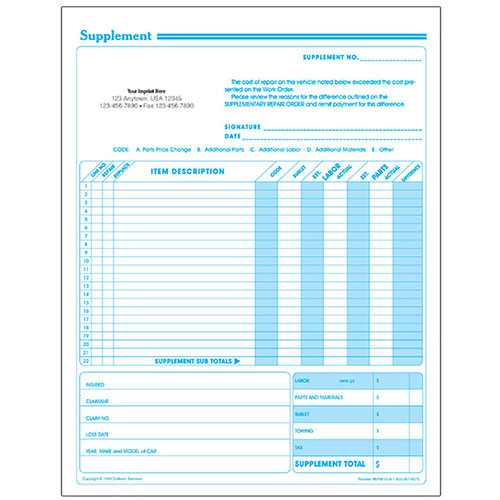
The most common gaps we see on Quad Cities roof estimates are missing code-upgrade costs (required by Illinois or Iowa building code but not automatically included), missing ice-and-water shield in valleys and eaves, wrong shingle quantity based on an inaccurate roof measurement, and missing accessories like pipe boots, ridge cap, or drip edge. We compare every estimate against our own on-roof measurements before we start work, and if there's a gap, we document it with photos and submit a supplement request to your insurer on your behalf.
What Should You Do If Your Estimate and Our Inspection Don't Match?
Don't sign a contract or start work based on an estimate that doesn't match reality. Bring us your estimate before you make any final decisions — we'll walk through it line by line, compare it to our own inspection findings, and let you know if it's accurate, short, or needs a supplement. We handle supplement requests directly with adjusters so you're not stuck negotiating paperwork on your own.
Do I need to accept the first insurance estimate I receive?
No. Insurance estimates are a starting point, not a final number. If our inspection finds damage or code requirements your estimate missed, we'll help you request a supplement — this is a normal part of the claims process, not a confrontation with your insurer.
How long does it take to recover depreciation after the roof is finished?
Once we complete the work and you submit the final invoice to your insurer, most companies release the recoverable depreciation within a few weeks. We can help you assemble the documentation to speed this up.
What if my estimate doesn't list a deductible or code-upgrade coverage?
Every policy is different — some Quad Cities homeowners have ordinance-or-law coverage that pays for code upgrades, others don't. We recommend checking your declarations page or asking your agent directly, and we're happy to help you read through it.
Can Twin Bridge help if my estimate seems too low compared to the damage?
Yes. We inspect the roof ourselves, document everything with photos, and submit a written supplement request with our findings. We never suggest inflating a claim — we simply make sure the estimate reflects what your roof actually needs.
If you've got an insurance estimate you're not sure how to read, bring it to us. Schedule your free inspection or call (563) 655-4902 and we'll walk through it with you line by line. Done Right. Done Forever.
