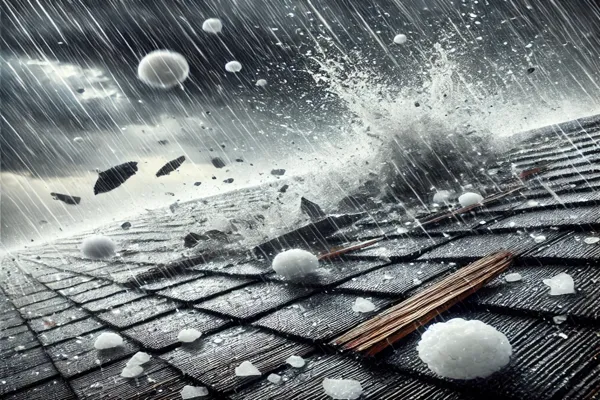
Storm & Hail Damage Roof Repair in the Quad Cities: A Homeowner's Guide (2026)
Quad Cities Homeowner Guide · Storm & Hail Damage
Storm & Hail Damage Roof Repair in the Quad Cities: A Homeowner's Guide
How to spot hail and wind damage, what to do in the first 48 hours, how to avoid storm-chaser scams, and when insurance should pay — for homeowners in Davenport, Bettendorf, Moline, Rock Island, Milan & East Moline.
Quad Cities storms don't always announce themselves. A round of hail or a straight-line wind event can pass in minutes and leave a roof that looks perfectly fine from the driveway — while the damage that shortens its life is already done. By the time a leak shows up, months can pass and the storm that caused it is harder to prove.
This guide walks you through it: what storm damage actually looks like, why it's often invisible, what to do in the critical first two days, how hail and wind differ, how to avoid the scammers who follow every storm, and when to bring insurance into it.
- What does storm damage to a roof look like?
- Why storm damage often isn't visible right away
- Hail vs. wind: how they damage a roof differently
- What to do in the first 48 hours after a storm
- When to schedule a post-storm inspection
- Will insurance pay for storm damage?
- How to avoid storm-chaser scams
- How to prepare your roof for storm season
- Frequently asked questions
What does storm damage to a roof look like?
Storm damage falls into a few main categories. Here's what to look for:
| Type | Signs on your roof & home |
|---|---|
| Hail | Dark bruised spots on shingles, dented gutters/vents/flashing, granules piling in downspouts, dings on the AC unit or mailbox |
| Wind | Lifted, creased, or torn shingles, missing tabs, damaged ridge caps, debris on the roof, exposed nail lines |
| Tree / impact | Punctures, cracked decking, dented areas from fallen limbs (see structural risk below) |
Learn the details: How to Spot Hail Damage on Asphalt Shingles, Hail Damage Isn't Always Obvious, and Tree and Impact Damage: Assessing the Real Structural Risk.
Storm just hit? Get a free inspection.
We'll check your roof, gutters, and siding for storm damage — and tell you honestly whether it's worth a claim.
Call (563) 655-4902 for a Free Storm InspectionWhy storm damage often isn't visible right away
The most dangerous storm damage is the kind you can't see from the ground. Hail can bruise a shingle and knock off the protective granules without cracking it — the shingle looks intact but its life is cut short and it will fail early. Wind can break the adhesive seal between shingles so they lift in the next storm and let water in, even though nothing blew off. That's why so many Quad Cities homeowners are surprised by a leak weeks or months after a storm. See Why Storm Damage Doesn't Always Show Up Right Away and What Happens to Your Roof After a Wind Advisory.
Hail vs. wind: how they damage a roof differently
Both are common in the Quad Cities, and they damage a roof in different ways — which matters for repairs and for your insurance claim:
| Hail | Wind | |
|---|---|---|
| How it hits | Impact bruising, scattered and random | Uplift and tearing, worst on exposed edges/elevations |
| Typical result | Granule loss, soft-metal dents, shortened shingle life | Broken seals, lifted/missing shingles, ridge-cap damage |
| Often missed because | No leak yet — damage is cosmetic-looking but functional | Roof "looks okay" — the broken seal is invisible |
More: Hail vs. Wind: Which Causes More Long-Term Damage? and Straight-Line Wind vs. Tornado Damage.
What to do in the first 48 hours after a storm
- Stay safe and stay off the roof. Check for obvious damage from the ground and inside your attic (daylight, wet spots).
- Document everything. Photos of damage, the date of the storm, and any debris or fallen limbs.
- Get a professional inspection. A roofer can spot the damage you can't and tell you if it's claim-worthy.
- Tarp active leaks temporarily. If water is getting in, emergency tarping protects your home until a permanent repair. (See Emergency Roof Tarping After a Storm.)
- Don't sign anything with a door-knocker the same day. (More on that below.)
Step-by-step: How to Check for Roof Damage After a Storm.
When to schedule a post-storm inspection
Sooner is better. The fresher the damage, the easier it is to tie it to a specific storm for insurance — and the less time water has to find its way in. Even if you see nothing from the ground, a professional inspection after a significant hail or wind event is worth it. See When Should You Schedule a Post-Storm Roof Inspection? and Why You Should Have a Professional Inspection After a Storm.
Will insurance pay for storm damage?
If your roof was damaged by a covered event like hail or wind, homeowners insurance typically covers the repair or replacement minus your deductible. The keys are proving the damage came from the storm (not age) and documenting the full scope. We've written a complete, step-by-step guide to this: Roof Insurance Claims in the Quad Cities: A Homeowner's Step-by-Step Guide.
How to avoid storm-chaser scams
After every major Quad Cities storm, out-of-town crews flood neighborhoods knocking doors. Some are legitimate; many are not. Protect yourself:
- Be wary of anyone pressuring you to sign today.
- Never work with a contractor who offers to "waive" your insurance deductible — it's illegal in Iowa and Illinois.
- Verify a real local address, license, and insurance.
- Get the scope and price in writing before any work starts.
See Common Roofing Scams to Watch Out For After a Storm.
How to prepare your roof for storm season
A little prep before spring and summer storms reduces damage and makes claims cleaner. Keep gutters clear, trim overhanging branches, and get an inspection before the season so you have a baseline. See How to Prepare Your Quad Cities Roof for Storm Season and Storm-Ready Homes: Preparing Your Exterior.
Don't wait for a leak to find the damage.
Free storm inspection from a local Quad Cities team — we document everything and stand with you through the whole claim.
Call (563) 655-4902 · Free Storm InspectionFrequently asked questions
How soon after a storm should I get my roof inspected?
As soon as it's safe. Fresh damage is easier to document and tie to the storm for insurance, and it limits the time water has to get in.
Can my roof be damaged if no shingles blew off?
Yes. Hail can bruise shingles and strip granules without cracking them, and wind can break the seals that keep water out — both leave a roof that looks fine but will fail early.
Does insurance cover hail and wind damage?
Typically yes, minus your deductible, if the damage came from a covered storm event. Age-related wear is not covered. See our full roof insurance claims guide.
Should I pay a door-to-door roofer who showed up after the storm?
Be cautious. Never sign under pressure the same day, and avoid anyone offering to waive your deductible. Verify license, insurance, and a real local address first.
What should I do if my roof is leaking right now?
Contain the water inside, stay off the roof, and call for emergency tarping to protect your home until a permanent repair can be made.
